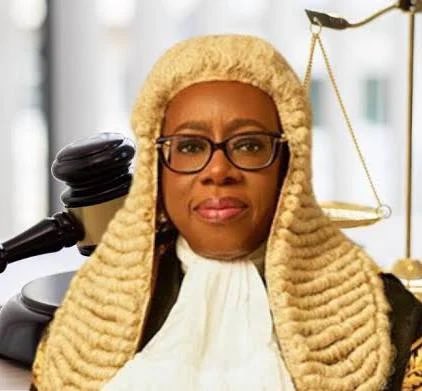
The National Judicial Council (NJC) recommends Justice Olubunmi Oyewole, Presiding Justice of the Court of Appeal, Enugu Division, for appointment as a Justice of the Supreme Court of Nigeria, marking a key development in ongoing judicial reforms and appointments.
According to Mediaplusng.com, the decision is taken at the 110th meeting of the Council held on January 13, 2026, under the chairmanship of the Chief Justice of Nigeria, Justice Kudirat Kekere-Ekun. The NJC also approves 35 other candidates for appointment into various judicial offices across the federation.
Justice Oyewole, born on May 13, 1965, hails from Ila-Orangun in Osun State. His recommendation fills the South-West slot at the Supreme Court left vacant following the retirement of former Chief Justice of Nigeria, Justice Olukayode Ariwoola. The NJC describes his elevation as part of efforts to strengthen the apex court with experienced and tested jurists.
Mediaplusng.com reports that beyond the Supreme Court recommendation, the Council also approves the appointment of 27 judges to various State High Courts. Borno and Plateau States receive six judges each, Ekiti gets five, while Niger and Delta States get four judges each. Benue and Taraba States receive one judge apiece.
The NJC further recommends six Kadis for appointment to Sharia Courts of Appeal, with Niger State receiving three, Taraba two, and Katsina one. Two judges are also approved for appointment to the Customary Court of Appeal in Delta State, expanding judicial capacity at different levels of the justice system.
In addition, the Council extends the appointment of the Acting Chief Judge of Imo State, Justice I. O. Agugua, by three months. It also calls on Imo State Governor, Hope Uzodimma, to urgently commence the process of constituting the State Judicial Service Commission to enable the appointment of a substantive Chief Judge.
The NJC stresses that the prompt appointment of a substantive Chief Judge is critical to ensuring stability, safeguarding judicial independence, and promoting effective administration of justice in Imo State.
On disciplinary matters, the Council clears the Chief Judge of Osun State, Justice Oyebola Adepele Ojo, of allegations bordering on financial misconduct and judicial impropriety. The decision follows the adoption of a report by a three-member investigation committee that finds the petitions against her lacking in merit.
Similarly, the NJC dismisses a petition against Justice Gentu E. Timi of the Delta State High Court over alleged misconduct arising from a chieftaincy dispute. The Council also reverses the one-year suspension without pay earlier imposed on Justice Jane Inyang of the Court of Appeal, Uyo Division.
Out of 39 petitions reviewed during the session, the NJC dismisses 26 for lack of merit, refers seven for further investigation, and issues cautions to two judicial officers. One of the officers is cautioned for delivering judgment outside the constitutionally required 90-day period and for using inappropriate language in responding to a petition.
The Council reiterates its warning to judges against the indiscriminate granting of ex-parte orders and advises Heads of Court to exercise caution when assigning complex cases to newly appointed judges.
The NJC also sets up a committee to review requests submitted by nine dismissed judges of the Imo State Judiciary. However, it declines to entertain a fresh petition against the Acting Chief Judge of Imo State, having previously considered and resolved the same issues.
The latest decisions underscore the NJC’s continued focus on judicial accountability, institutional stability, and the strengthening of Nigeria’s justice system through merit-based appointments and strict oversight.