
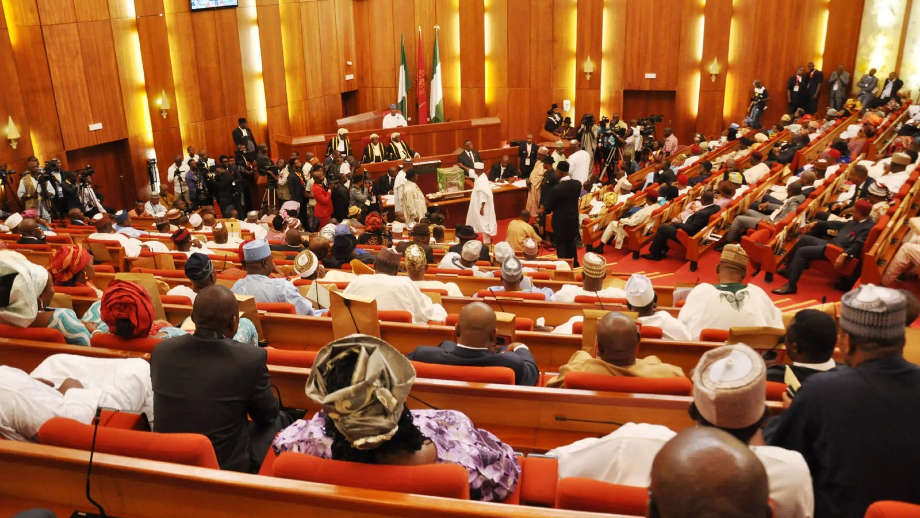
The Nigerian Senate amends Clause 28 of the Electoral Act Amendment Bill, reducing the statutory notice period for elections from 360 days to 300 days. The adjustment grants the Independent National Electoral Commission greater flexibility to schedule the 2027 Presidential and National Assembly elections between December 2026 and January 2027, with the aim of avoiding a potential overlap with the Ramadan period.
Mediaplusng.com reports that the amendment modifies the timeline within which the electoral body must publish a notice of election. Under the revised provision, the Commission is required to issue the notice not later than 300 days before the date appointed for the election, instead of the previously stipulated 360 days.
The amended Clause 28 now states that the Commission shall, not later than 300 days before the day appointed for holding an election under the Bill, publish a notice in each state of the federation and the Federal Capital Territory. The notice must state the date of the election and designate the locations where nomination papers are to be submitted.
Mediaplusng.com gathers that the amendment is adopted during the clause-by-clause consideration of the reworked Electoral Act Amendment Bill. The revision follows a motion on rescission and recommittal of the Electoral Act 2022 (Repeal and Re-Enactment) Bill, 2026, moved by Senate Leader Opeyemi Bamidele.
In presenting the motion, Senator Bamidele explains that a critical review of the earlier version of the bill reveals that the 360-day notice requirement could inadvertently result in scheduling the 2027 general elections during the Ramadan fasting period. He emphasizes the need for legislative foresight to ensure inclusive participation and smooth electoral planning.
Mediaplusng.com further reports that the Senate Leader notes that conducting elections during Ramadan could affect voter turnout, logistical coordination, stakeholder engagement, and the overall credibility of the electoral process. He argues that the revised timeline provides necessary flexibility to protect the integrity and inclusiveness of Nigeria’s democracy.
Beyond the adjustment of the notice period, lawmakers also identify technical inconsistencies within the bill. The motion highlights discrepancies in the Long Title and several clauses, including Clauses 6, 9, 10, 22, 23, 28, 29, 32, 42, 47, 51, 60, 62, 64, 65, 73, 77, 86, 87, 89, 93, and 143. According to the Senate, the issues relate to cross-referencing errors, serial numbering gaps, and internal inconsistencies that require correction.
The amendment process underscores the Senate’s effort to refine the proposed legislation before final passage. Lawmakers stress that electoral reforms must be precise, internally coherent, and administratively practical to avoid ambiguity in implementation.
Political analysts observe that the revised 300-day notice window gives the electoral commission broader scheduling options while still maintaining adequate preparation time for political parties, candidates, and electoral stakeholders. They note that balancing legal timelines with socio-religious considerations reflects the complexity of electoral planning in a diverse society.
The development also places renewed focus on the operational readiness of the Independent National Electoral Commission, which will ultimately determine the final election dates within the adjusted legal framework. Stakeholders emphasize the importance of early planning, voter education, and transparent communication ahead of the 2027 polls.
As deliberations on the Electoral Act Amendment Bill continue, the Senate maintains that the objective remains to strengthen Nigeria’s electoral framework, enhance inclusiveness, and ensure credible elections. Observers say the latest amendment demonstrates proactive legislative action aimed at preventing avoidable challenges in the upcoming general election cycle.