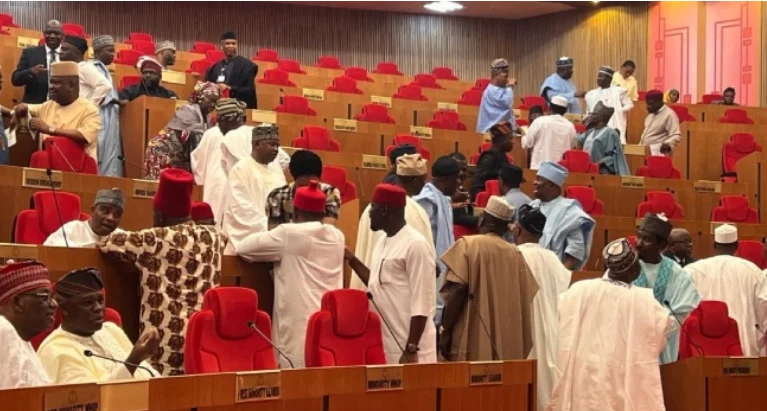
A tense and rowdy session unfolds in the Nigerian Senate as lawmakers clash over a demand for division on Clause 60 of the Electoral Act Amendment Bill. The heated exchange centers on provisions relating to electronic transmission of election results and the conditions under which manual transmission may apply in the event of network failure.
Mediaplusng.com reports that the confrontation begins when Senator Enyinnaya Abaribe raises a demand for division on Clause 60 during plenary. The Senate President responds by stating that he believes the demand had earlier been withdrawn. However, several opposition senators immediately object to that position, insisting that the issue remains unresolved.
As tensions escalate, the Deputy Senate President cites Order 52(6), arguing that it would be procedurally out of order to revisit a matter on which the presiding officer has already ruled. This submission triggers another uproar in the chamber, with lawmakers shouting across the aisle. During the exchange, Senator Sunday Karimi and Senator Abaribe have a brief but visible face-off, further heightening the atmosphere.
Mediaplusng.com gathers that the Senate Leader intervenes to clarify that he had previously sponsored a motion for rescission, effectively reopening aspects of the bill for reconsideration. He underscores that decisions earlier taken by the Senate are no longer binding under the rescission framework, maintaining that Senator Abaribe’s demand for division is procedurally consistent with the motion.
In response, the Senate President suggests that the renewed call for division may be an attempt to publicly demonstrate a political stance before Nigerians. Despite the debate, he sustains the point of order raised, prompting Senator Abaribe to rise again in protest before being urged to formally move his motion in accordance with Senate rules.
Mediaplusng.com further reports that rising under Order 72(1), Senator Abaribe formally calls for a division on Clause 60(3). The clause addresses procedures for result transmission, particularly the provision that if electronic transmission fails, Form EC8A should not serve as the sole basis for collating results. Abaribe specifically calls for the removal of the proviso permitting manual transmission in cases of network failure.
The demand for division sets the stage for a physical count of votes, with the Senate President directing senators who support the proviso to stand, followed by those opposed. The chamber remains visibly charged as members align themselves according to their positions on electronic versus manual transmission safeguards.
When the count is completed, fifteen opposition senators stand against the proviso. The final tally announced by the Senate President indicates that 55 senators vote in support of retaining the caveat, while 15 senators oppose it. The outcome effectively sustains the provision allowing manual transmission of results in the event of technical disruptions.
The debate over Clause 60 reflects broader national discussions surrounding election transparency, technological reliability, and safeguards within Nigeria’s electoral framework. Supporters of the proviso argue that manual transmission serves as a necessary contingency measure to prevent electoral paralysis during network failures. Opponents contend that retaining such a clause could weaken the credibility of electronic transmission reforms.
Political analysts observe that the division vote underscores deep partisan differences over electoral reforms, particularly as the country prepares for future general elections. The episode also highlights the procedural complexities involved in legislative reconsideration following motions for rescission.
As deliberations on the Electoral Act Amendment Bill continue, stakeholders across the political spectrum are closely monitoring developments within the Senate. Observers say the final shape of Clause 60 and related provisions will significantly influence the operational guidelines governing result transmission in Nigeria’s upcoming elections, reinforcing the importance of legislative clarity and transparency.