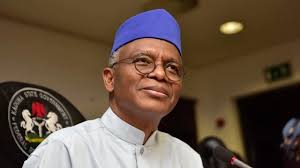
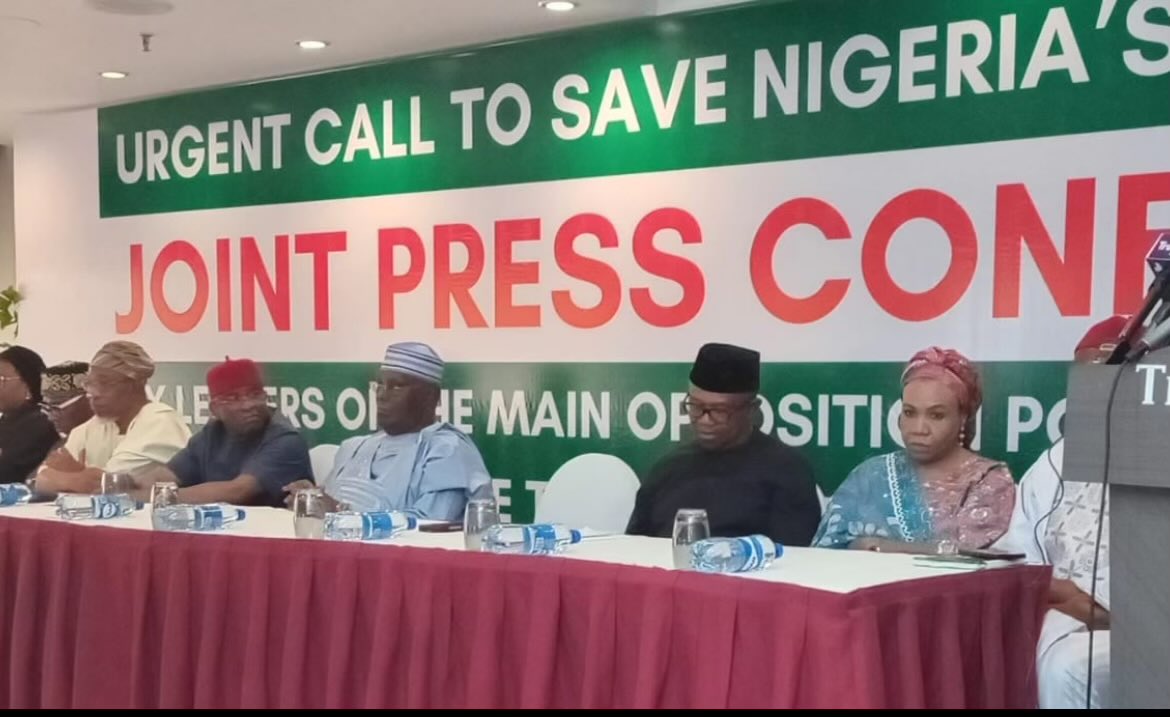
Leaders of Nigeria’s major opposition political parties convene a world press conference in Abuja, issuing what they describe as an urgent call to protect Nigeria’s democracy amid concerns over the amended Electoral Act 2026 and related political developments.
According to Mediaplusng.com, the opposition leaders address journalists at the Transcorp Hotel, Abuja, stating that they gather with a shared objective to defend democratic institutions and prevent what they term a looming crisis ahead of the 2027 general elections.
The opposition bloc expresses strong reservations about the Electoral Act 2026, recently passed by the National Assembly and assented to by President Bola Ahmed Tinubu. They argue that certain provisions in the new law may undermine electoral transparency, weaken opposition parties and erode public confidence in the electoral system.
Mediaplusng.com reports that the parties maintain that public hearings on the amendment process witness significant citizen engagement and widespread concerns, but allege that many stakeholder recommendations are not reflected in the final legislation.
Central to their objections is Section 60(3) of the Act, which they say grants broad discretionary powers to presiding officers during result transmission. The opposition contends that this provision could weaken the integrity of electronic transmission of results from polling units.
They reference past statements by former electoral officials, including ex-INEC Chairman Mahmud Yakubu and former INEC Commissioner Festus Okoye, who have previously spoken about the functionality of BVAS technology and electronic transmission systems.
In further remarks covered by Mediaplusng.com, the opposition cites data from the Nigerian Communications Commission indicating extensive network coverage nationwide, arguing that concerns about connectivity should not justify limiting real-time transmission of results.
On party primaries, the opposition also questions amendments to Section 84 of the Act, which limit political parties to direct primaries and consensus for candidate selection. They describe the provision as an encroachment on the constitutional autonomy of political parties to manage their internal affairs.
According to the opposition leaders, indirect primaries remain a recognized and structured method of candidate selection in previous electoral frameworks, and restricting options could create internal challenges for parties.
They further comment on recent electoral experiences, including local government elections in the Federal Capital Territory, which they say reflect broader concerns about voter turnout and electoral confidence.
The opposition points to low voter participation rates in some recent elections as evidence of increasing voter apathy, warning that declining turnout may signal waning public trust in the democratic process.
In addition, they raise concerns about incidents of political violence in parts of the country, including reported attacks on opposition figures. They emphasize that democracy thrives on peaceful competition of ideas rather than intimidation or violence.
The parties also highlight the importance of judicial independence, noting that courts play a crucial role in electoral dispute resolution. They call for reforms that strengthen public trust in the judiciary and reinforce impartial adjudication of election matters.
In their concluding remarks, opposition leaders urge the National Assembly to revisit and amend contentious provisions of the Electoral Act 2026 to ensure alignment with democratic principles and citizens’ expectations for free, fair and credible elections.
They reaffirm their commitment to lawful and constitutional engagement in defending democratic values and call on civil society groups, stakeholders and the electorate to remain actively involved in protecting Nigeria’s electoral integrity.
As political activities gradually intensify ahead of the 2027 general elections, the opposition maintains that safeguarding electoral transparency, strengthening institutions and restoring public confidence remain central to the survival and growth of Nigeria’s democracy.