
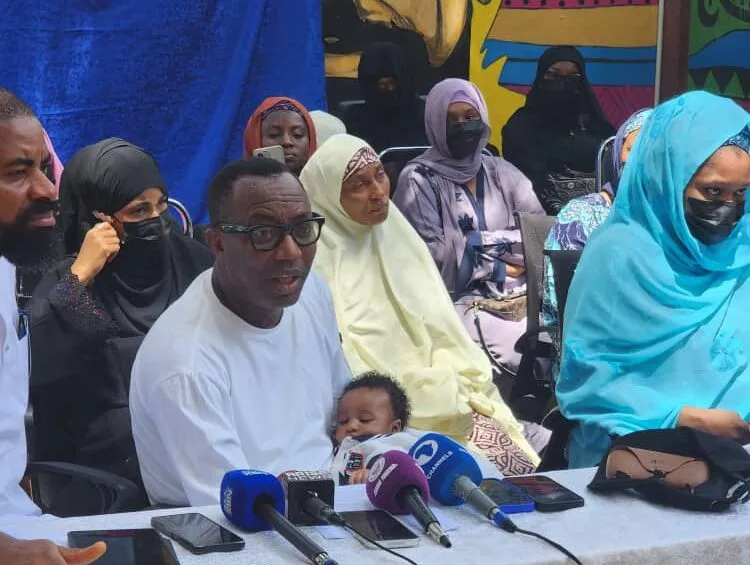
Families and spouses of several Nigerian military officers detained over an alleged coup plot are calling on the federal government and the military hierarchy to either formally charge the officers to court or release them without further delay.
The families, who speak during an emotional media briefing, say prolonged detention without trial is causing distress and uncertainty for their loved ones and dependents. According to Mediaplusng.com, the relatives insist that the principles of justice and the rule of law must be respected regardless of the gravity of the allegations.
The officers are reportedly being held by military authorities over suspected involvement in a plot to overthrow the government of President Bola Ahmed Tinubu. While details surrounding the alleged coup plot remain limited, the affected families say the uncertainty surrounding the case has persisted for months without clear legal proceedings.
Speaking at the press briefing monitored by Mediaplusng.com, the wives and relatives of the detained officers stand alongside human rights activists, including Omoyele Sowore and Deji Adeyanju, as they appeal to the federal government to ensure that due process is followed.
They urge President Tinubu to intervene and direct the appropriate military authorities to either present evidence before a competent court or immediately free the officers if no credible case exists against them.
According to the families, justice requires transparency and adherence to established legal procedures, especially in cases involving serious allegations such as attempts to overthrow a democratically elected government.
Reports gathered by Mediaplusng.com indicate that the family members express concern over the prolonged detention of the officers, noting that the lack of clear information about their legal status is causing emotional and financial hardship for their families.
During the briefing, several wives of the detained officers struggle to hold back tears as they describe the toll the situation has taken on their households and children.
They stress that their appeal is not an attempt to interfere with national security investigations but rather a call for fairness and accountability within the justice system.
One of the spouses says the families are not seeking special treatment but are simply asking that the legal process be respected.
According to them, if there is credible evidence linking their husbands to any wrongdoing, the government should present such evidence in court where the accused can defend themselves.
But if the authorities are unable to establish a case against the officers, they say continued detention would amount to injustice.
In their words, the wives declare that they are “not asking for favours but demanding justice.”
They say the continued uncertainty surrounding the alleged coup case has left families in emotional distress and economic hardship, especially for households where the detained officers are the primary breadwinners.
Human rights activist Omoyele Sowore, who attends the briefing in solidarity with the families, calls on the Nigerian authorities to uphold constitutional rights and respect the rule of law.
Sowore says in a democratic society, every citizen, including military personnel, deserves the right to a fair and timely trial.
He stresses that the principle of justice requires that individuals accused of crimes be given the opportunity to defend themselves before an impartial court.
Another activist, Deji Adeyanju, also urges the federal government and the military authorities to ensure transparency in handling the case.
Adeyanju notes that allegations of coup plotting are serious national security matters, but he adds that such cases must still be handled within the framework of the law.
He warns that prolonged detention without trial could raise questions about accountability and respect for human rights.
The activists emphasize that the credibility of democratic institutions is strengthened when authorities demonstrate commitment to fairness, transparency, and due process.
Observers say the situation highlights the delicate balance between safeguarding national security and protecting fundamental rights under Nigeria’s legal system.
Security analysts explain that coup allegations within the military are often treated with extreme caution due to their potential implications for national stability.
However, they add that legal processes remain essential to ensure that accusations are thoroughly investigated and fairly adjudicated.
Legal experts also point out that individuals accused of serious offenses must be given access to proper judicial proceedings where evidence can be tested and decisions made according to the law.
For the families of the detained officers, the central demand remains simple: clarity and justice.
They say the uncertainty surrounding the case has left them with unanswered questions about the fate of their husbands and the future of their families.
Some of the relatives say they have struggled to obtain information about the conditions of detention or the timeline for possible legal proceedings.
They therefore appeal directly to President Tinubu and the leadership of the Nigerian Armed Forces to address their concerns.
According to them, bringing the matter before a court would provide an opportunity for transparency and ensure that justice is served in accordance with the law.
If the officers are found guilty, they say they will respect the decision of the court.
But if no evidence exists to support the allegations, they insist the officers should be released and allowed to return to their families.
For now, the families say they remain hopeful that their appeal will lead to swift action from the authorities.
They emphasize that their call is not motivated by politics but by a desire for justice, fairness, and respect for the rule of law.
As the situation continues to attract attention from civil society groups and legal observers, many Nigerians are watching closely to see how the authorities will respond to the demands for either prosecution or release.
For the affected families, however, the issue is deeply personal—one that involves not just legal principles but the future and wellbeing of their loved ones.