
Nigeria’s Senate is witnessing another wave of political realignments as nine lawmakers announce their defection to the African Democratic Congress, ADC, prompting debate over the constitutional procedures governing such moves.
The President of the Senate, Godswill Akpabio, makes the announcement during plenary while also raising questions about whether one of the defections complies with constitutional requirements.
According to Mediaplusng.com, the senators who switch political parties include Eyinnaya Abaribe, formerly of the All Progressives Grand Alliance, as well as Aminu Tambuwal, Binus Yaroe, Lawal Usman, Onawo Ogoshi, and Augustine Akobundu, who move from the Peoples Democratic Party to the ADC.
Also joining the African Democratic Congress are Victor Umeh, Tony Nwoye, and Ireti Kingibe, who previously belong to the Labour Party.
The development reflects ongoing political shifts within Nigeria’s National Assembly as parties reposition ahead of future political contests.
According to Mediaplusng.com, Senate President Akpabio draws attention to the constitutional provisions guiding the defection of lawmakers from one political party to another.
He reminds the chamber that the Nigerian Constitution requires a legislator seeking to defect to demonstrate the existence of a division or faction within the political party they are leaving.
This provision, analysts say, is intended to discourage arbitrary party switching and ensure political stability within the legislative system.
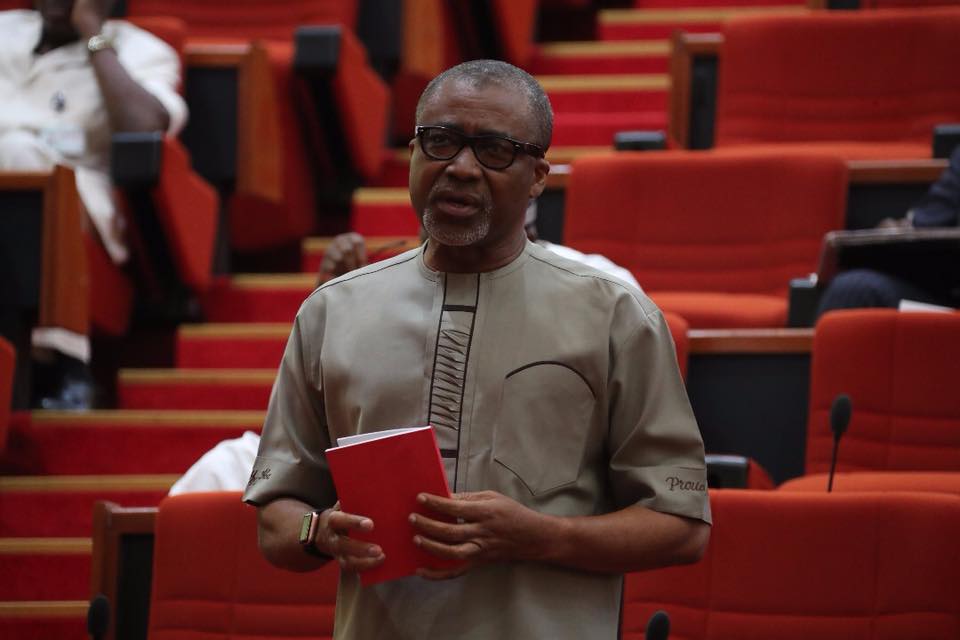
During the plenary session, some lawmakers express concern regarding the defection of Senator Eyinnaya Abaribe from the All Progressives Grand Alliance.
They argue that the party currently does not have a documented internal crisis or factional dispute that would justify the defection under the constitutional provisions.
According to Mediaplusng.com, senators referencing relevant sections of the constitution note that the absence of a verifiable crisis within the party could make the defection procedurally questionable.
In response to the concerns raised on the Senate floor, Senator Abaribe explains that he decides to leave the party after being allegedly dismissed by its leadership.
He tells the chamber that the development influences his decision to join the African Democratic Congress.
However, Senate President Akpabio notes that there is no documentary evidence presented before the Senate to confirm the alleged dismissal.
He explains that such documentation would be necessary to determine whether the defection aligns with constitutional guidelines.
As a result, the Senate indicates that the matter requires further verification before a final position can be established.
The debate intensifies when Senator Victor Umeh also speaks on the issue of party defections.
He argues that lawmakers who left the Labour Party had not presented significant issues because the factional disputes previously reported within the party have already been resolved.
His comments trigger a series of arguments and counterarguments among senators regarding the state of internal conflicts within their respective parties.
Political analysts say such debates are not unusual in Nigeria’s legislative environment where party defections often generate legal and political controversies.
They note that constitutional provisions governing defections remain one of the most frequently interpreted aspects of Nigeria’s democratic framework.
Observers say lawmakers sometimes rely on claims of internal party crises to justify their movement to other political platforms.
However, critics argue that such claims must be supported by credible evidence to comply with constitutional requirements.
In the case of Senator Abaribe, the Senate leadership decides to allow more time for clarification.
According to Mediaplusng.com, the Senate gives the lawmaker one week to reconsider his position and provide necessary documentation supporting his decision to defect.
The development highlights the procedural scrutiny that accompanies party defections within Nigeria’s National Assembly.
Meanwhile, the latest wave of defections is also altering the political composition of the Senate.
The current Senate consists of 106 members out of the constitutionally required 109 seats following the deaths of three lawmakers.
The All Progressives Congress currently holds the majority with eighty-three senators.
The Peoples Democratic Party has eleven senators, while the African Democratic Congress now counts nine members following the recent defections.
Other parties represented in the chamber include the New Nigeria Peoples Party with one senator, the Social Democratic Party with one senator who is yet to formally complete a defection process, and the All Progressives Grand Alliance with one senator.
The Labour Party currently has no senators after the recent defections announced during plenary.
Political observers say the evolving party composition could influence legislative dynamics and alliances within the Senate.
Experts also point out that party alignments often shape voting patterns, committee leadership, and policy debates within legislative chambers.
As Nigeria’s political environment continues to evolve, lawmakers are expected to maintain adherence to constitutional provisions governing their roles and responsibilities.
For now, attention remains on the Senate’s review of Senator Abaribe’s defection and whether it meets the legal requirements outlined in the Nigerian Constitution.
The decision expected after the one-week period could further clarify the Senate’s interpretation of constitutional rules governing party defections.
Ultimately, the debate underscores the ongoing tension between political realignment and constitutional compliance within Nigeria’s legislative system.