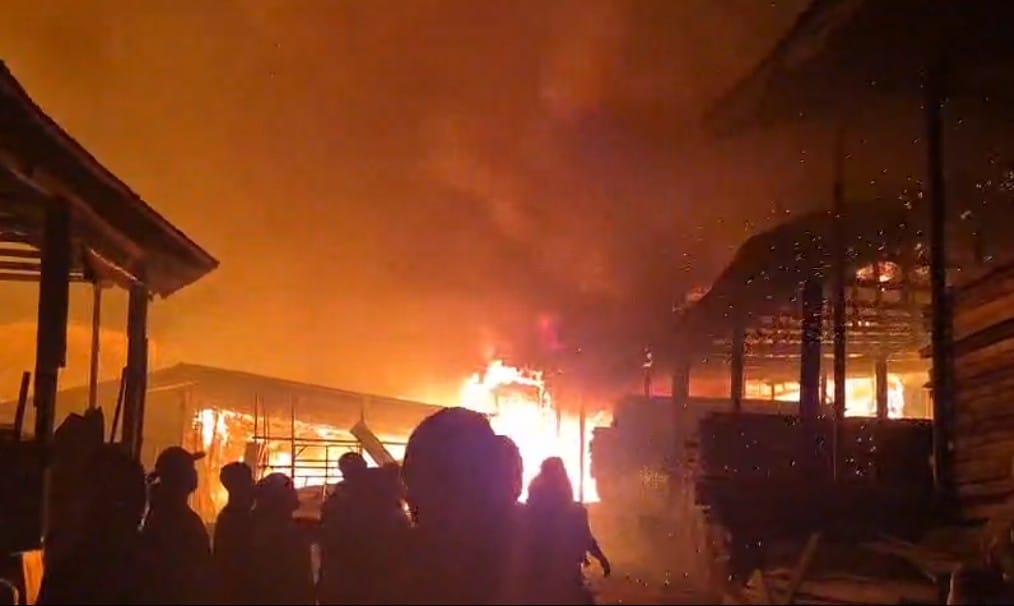
A major fire outbreak is devastating the Akim Timber Market in Calabar, Cross River State, destroying goods worth millions of naira and leaving traders counting heavy losses.
The incident occurs after business hours, with flames spreading rapidly across several sections of the market, catching traders and nearby residents off guard. According to Mediaplusng.com, the scale of destruction is extensive, affecting numerous shops and livelihoods within the busy commercial hub.
Traders and residents respond immediately, making desperate attempts to contain the inferno as it intensifies and engulfs structures within the market.
Despite collective intervention, the fire continues to spread due to its intensity, limiting the ability of those present to bring the situation under control.
Many traders watch helplessly as their goods and investments are destroyed, with some attempting to salvage items while others lose everything within a short period.
The atmosphere is filled with distress as affected individuals express shock and grief, with several traders breaking down after witnessing years of hard work vanish in minutes.
According to Mediaplusng.com, local efforts dominate the initial response as the fire rages, raising concerns about the availability and timeliness of firefighting support in the area.
Authorities have yet to confirm the origin of the fire, though early speculation points to possible electrical faults or accidental ignition.
Officials are likely to launch a detailed probe to determine the exact cause and prevent future occurrences in major markets across the state.
The Akim Timber Market serves as a vital trading hub in Calabar, and the destruction is expected to disrupt supply chains and affect the income of many families dependent on the market.
Affected business owners are calling on the Cross River State Government and relevant agencies to provide urgent assistance to help them recover and rebuild.
Many are urging authorities to implement stronger fire safety measures, including improved infrastructure, accessible firefighting equipment, and emergency preparedness systems.
As the fire subsides, the once-bustling market is left in devastation, with charred remains of shops and goods scattered across the area.
Traders face the difficult task of rebuilding their businesses amid financial setbacks and emotional strain.
Stakeholders emphasize the need for immediate relief measures, including financial aid and policy support, to restore economic activities in the affected market.
Market fires continue to pose significant risks in Nigeria, often linked to poor infrastructure, inadequate safety systems, and delayed emergency response.
Experts stress the importance of preventive strategies, including regular inspections, public awareness, and investment in firefighting capacity.
As investigations continue and affected traders assess their losses, attention remains on how quickly support can be mobilized to restore livelihoods and prevent future disasters.