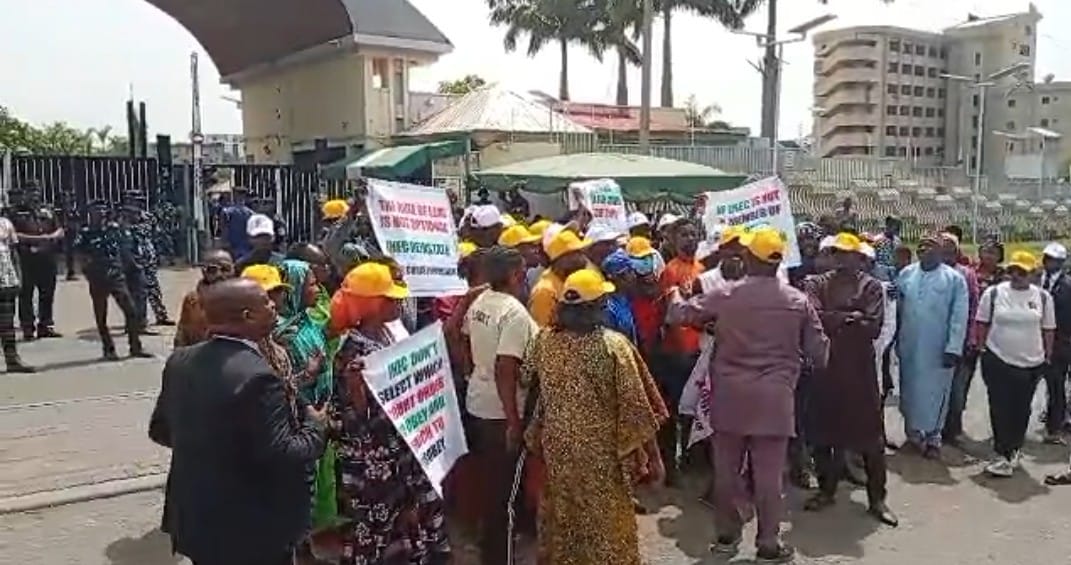
The Movement for Credible Elections, MCE, is calling for the immediate suspension of the proposed voter revalidation exercise by the Independent National Electoral Commission, INEC, describing the plan as ill-timed and potentially harmful to Nigeria’s electoral process ahead of the 2027 general elections.
In a statement signed by its National Secretariat and made available to Mediaplusng.com, the group expresses strong opposition to the initiative, warning that it could undermine electoral credibility, transparency, and public trust if implemented in its current form.
While recognizing that INEC’s stated objective of sanitizing the voters’ register may appear well-intentioned, MCE argues that the timing and structure of the proposed exercise raise serious concerns about its practicality and underlying implications.
MCE notes that the country is already undergoing Continuous Voter Registration, CVR, across various centres, and introducing an additional layer of revalidation at this stage reflects poor coordination of electoral processes.
According to Mediaplusng.com, the organization emphasizes that overlapping electoral activities could overstretch INEC’s operational capacity, potentially affecting critical preparations such as logistics planning, staff training, voter education, and deployment frameworks.
MCE highlights that conducting a nationwide voter revalidation exercise less than a year to general elections could create administrative bottlenecks and complicate preparations for a smooth electoral process.
It also expresses concern over what it describes as inadequate public awareness surrounding the proposed exercise, warning that limited communication could deepen distrust among voters.
MCE points out that public confidence in electoral processes is already fragile, and introducing a poorly communicated initiative may further erode institutional credibility.
Another major concern raised is the possibility of manipulation, with the organization warning that the revalidation process could be exploited to selectively disenfranchise voters under the guise of non-compliance.
MCE argues that there is currently no independent mechanism for citizens or observers to verify participation in the revalidation exercise, raising questions about transparency and accountability.
It further notes that the limited timeframe between the proposed revalidation exercise and the final voter register may not allow sufficient opportunity for claims and objections, as required under electoral laws.
MCE cautions that the introduction of an additional requirement for voters could discourage participation, especially among citizens already disillusioned with previous electoral experiences.
The organization emphasizes that INEC has traditionally conducted periodic clean-ups of the voter register—removing duplicates and correcting anomalies—without requiring citizens to undergo revalidation.
It argues that the Permanent Voter Card, PVC, is designed to be durable and valid over time, making the proposed revalidation appear inconsistent with established electoral practices.
MCE urges Nigerians, civil society organizations, political stakeholders, and the international community to critically examine the proposal and demand accountability from the electoral body.
The Movement calls on INEC to immediately suspend the proposed voter revalidation exercise and instead focus on strengthening the ongoing Continuous Voter Registration process.
It also advises the Commission to rely on existing administrative and technological mechanisms to clean the voters’ register without imposing additional burdens on citizens.
MCE stresses the importance of rebuilding public confidence through transparency, stakeholder engagement, and adherence to global best practices in election management.
According to the organization, any process that introduces uncertainty, lack of clarity, or potential exclusion of eligible voters poses a threat to democratic participation and electoral legitimacy.
MCE maintains that Nigeria’s democracy cannot afford what it describes as a poorly timed and potentially flawed electoral exercise, warning that the integrity of the voters’ register must be preserved at all costs.
The debate surrounding INEC’s proposed voter revalidation exercise is expected to shape discussions on electoral reforms and preparations for the 2027 general elections in Nigeria.
-22 April 2026