The Federal Government has approved a monthly transport allowance of seventy thousand naira for workers for six months, beginning in November 2026, as part of measures to cushion the impact of rising petroleum pump prices on Nigerian workers.
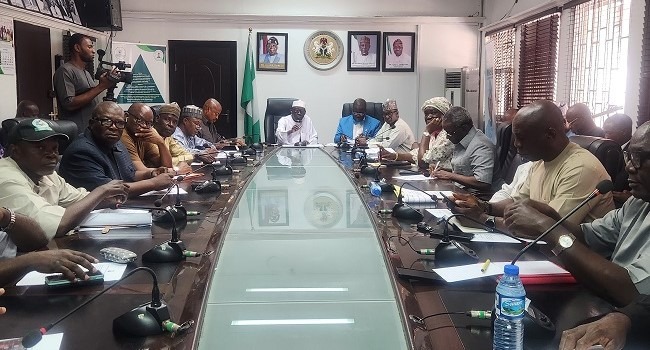
The approval was among the resolutions reached at a conciliation meeting between the Federal Government and the Nigeria Labour Congress, NLC, held at the Federal Ministry of Labour and Employment.
The meeting focused on addressing workers’ concerns over the rising cost of living, transportation expenses, outstanding allowances and the need to improve workers’ welfare amid prevailing economic challenges.
Under the agreement, eligible workers are expected to receive seventy thousand naira monthly for six months, starting in November 2026. The intervention is intended to provide temporary financial relief to workers grappling with increased transportation costs following changes in petroleum prices.
The decision represents one of the measures agreed upon by the government and organised labour to ease the financial pressure on Nigerian workers and promote industrial harmony.
In addition to the transport allowance, the meeting reached an agreement on the payment of outstanding peculiar allowances.
According to the resolutions, the arrears will be paid in three equal monthly instalments, beginning in November 2026.
The arrangement is expected to provide a structured approach to settling the outstanding obligations while spreading payments over the agreed period.
The meeting also addressed the outstanding allowances owed to health workers.
Under the agreement, nineteen months of outstanding allowances for health workers are to be redeemed within three months, beginning in December 2026.
The commitment is significant for health sector employees who have been awaiting payment of the outstanding entitlements.
The implementation of the agreement will be closely watched by organised labour and affected workers, particularly as they seek assurances that the government will meet the agreed payment timelines.
Beyond the immediate financial relief, the meeting also considered the broader issue of workers’ earnings and the need for a more sustainable approach to wage negotiations.
The resolutions provide that a Minimum Wage Negotiation Committee will be constituted and begin meetings immediately.
The proposed committee is expected to provide a platform for discussions on minimum wage-related issues, bringing the government and relevant stakeholders together to deliberate on workers’ remuneration.
The development comes amid continued concerns about the purchasing power of Nigerian workers, with transportation, food, housing and other essential expenses placing pressure on household budgets.
For many workers, the rising cost of commuting between home and the workplace has become a major financial burden, reducing the value of their monthly earnings.
The six-month transport intervention is therefore expected to offer some temporary support, although its overall impact will depend on the eligibility criteria, payment arrangements and effective implementation of the agreement.
On the issue of tax relief, the Federal Government and the Nigeria Labour Congress agreed that the matter should be presented to the National Economic Council, NEC, for consideration.
The issue is expected to receive further attention through the council, although the conciliation meeting did not announce a final tax relief arrangement.
The inclusion of tax relief in the discussions reflects organised labour’s wider concerns about the financial burden on workers and the need for measures that can improve disposable income.
The outcome of the conciliation meeting underscores the continuing engagement between the Federal Government and organised labour over workers’ welfare and the economic pressures facing households.
However, attention will now shift to the implementation of the agreed measures, including the commencement of the monthly transport allowance in November, the payment of peculiar allowance arrears in three instalments, and the settlement of outstanding health workers’ allowances from December.
Workers and labour organisations will also be looking for progress on the constitution of the Minimum Wage Negotiation Committee and the consideration of tax relief by the National Economic Council.
The government’s ability to fulfil these commitments within the agreed timelines is likely to be a key factor in determining workers’ response to the resolutions.
For now, the approved transport allowance and the other commitments offer a framework for addressing some of the immediate concerns raised by organised labour, as discussions continue on wages, taxation and the broader cost-of-living challenge in Nigeria.