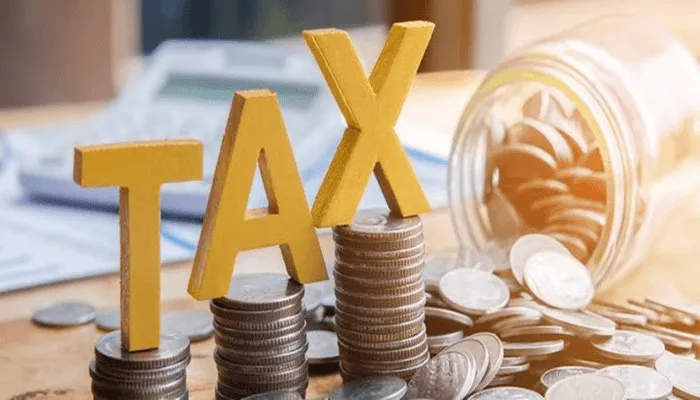
Nigeria has recorded a 27 per cent increase in tax revenue collected by 23 states in the first half of 2026, as authorities intensify efforts to improve tax administration, reduce multiple taxation and ease the burden on businesses and low-income earners.
The Executive Secretary of the Joint Revenue Board, Olusegun Adesokan, disclosed this on Wednesday in Abuja, saying the participating states generated approximately two-point-two trillion naira between January and June 2026, compared with one-point-seven-five trillion naira during the corresponding period in 2025.
According to Adesokan, the increase reflects efforts to widen the tax base, strengthen revenue collection and ensure that taxpayers contribute according to their financial capacity.
He maintained that the reforms were designed to improve government revenue without placing an excessive burden on ordinary Nigerians.
“The vision is to tax prosperity, not poverty. Tax the fruit, not the seed. We should tax returns, not investments,” Adesokan said.
The Joint Revenue Board clarified that the figures cover only 23 states that submitted their returns and should not be interpreted as the performance of all 36 states and the Federal Capital Territory.
The revenue increase comes as Nigeria implements a new tax regime that took effect on January 1, 2026, alongside efforts to simplify the tax system and improve compliance.
Adesokan said data presented by the board indicated that approximately 92 per cent of income earners in the states covered by the figures were paying lower personal income tax or no personal income tax under the new regime.
The Nigeria Tax Act 2025 introduced a revised personal income tax structure, including an exemption on the first 800,000 naira of annual taxable income, while higher income bands attract progressively higher rates, reaching 25 per cent on taxable income above 50 million naira.
The revised system also provides for eligible deductions, including pension contributions and certain housing-related expenses.
The board has urged employers and payroll administrators to apply the new provisions correctly when calculating workers’ tax deductions.
Beyond personal income tax relief, the Joint Revenue Board is working to eliminate overlapping taxes and levies imposed by different authorities at the state and local levels.
Adesokan disclosed that 21 states had adopted a model harmonised taxes and levies law developed by the board in collaboration with the Presidential Committee on Fiscal Policy and Tax Reforms.
The framework consolidates more than 100 taxes, levies and charges into nine categories, with the objective of simplifying compliance and providing greater clarity for businesses and individuals.
The 21 states are Kebbi, Kaduna, Zamfara, Ekiti, Enugu, Abia, Anambra, Gombe, Adamawa, Yobe, Borno, Niger, Plateau, Benue, Kogi, Kwara, Nasarawa, Akwa Ibom, Bayelsa, Delta and Ondo.
The remaining 15 states are yet to adopt the model legislation.
Adesokan explained that adoption requires legislative approval and consultations with stakeholders, rather than directives from governors alone. He expressed optimism that additional states would embrace the framework as implementation progresses.
The board said the harmonisation initiative is intended to prevent situations in which businesses are subjected to overlapping demands for the same taxable activity by different government authorities.
It stressed that the objective is not to introduce additional taxes but to simplify existing levies, strengthen accountability and improve consistency in revenue administration.
Meanwhile, the Joint Revenue Board is working with the police and state revenue authorities to tackle illegal roadside collections and unauthorised revenue demands along highways and transport routes.
Adesokan warned that illegal collections increase transportation costs, which can ultimately be passed on to consumers through higher prices for food and other essential commodities.
He called for greater use of technology and stronger enforcement to eliminate unauthorised collections, including revenue roadblocks, the sale of illegal stickers and emblems, and demands for cash payments without proper authorisation.
The board has also advised taxpayers to verify revenue demands with the appropriate authorities and avoid paying money into private accounts or accounts belonging to consultants without proper confirmation.
It added that informal-sector traders who qualify for income tax exemptions should not be subjected to income tax demands, although other lawful charges may still apply.
In another development, the board is working with the Nigeria Revenue Service and state internal revenue services to improve taxpayer identification and information sharing.
The proposed unified Tax Identification Number system is expected to help authorities verify taxpayer records across state boundaries, reduce duplicate documentation and prevent repeated income tax demands arising from poor coordination.
The initiative is also expected to support joint tax audits involving federal and state revenue authorities, reducing repeated inspections and disruptions to businesses.
Adesokan urged Nigerians with complaints about tax administration to seek redress through the appropriate channels, including the Office of the Tax Ombud, which provides an avenue for resolving taxpayer complaints.
The Joint Revenue Board, formerly known as the Joint Tax Board, received an expanded mandate under the Joint Revenue Board (Establishment) Act 2025. Its responsibilities include coordinating tax administration, harmonising taxes and levies, resolving disputes between tax authorities and improving the exchange of tax-related information.
The board says the ultimate measure of the reforms will be whether they improve compliance, reduce the burden on businesses, encourage job creation and support sustainable economic growth.
For Nigerian taxpayers, the challenge will be ensuring that higher government revenue translates into better public services, a more predictable business environment and improved living standards