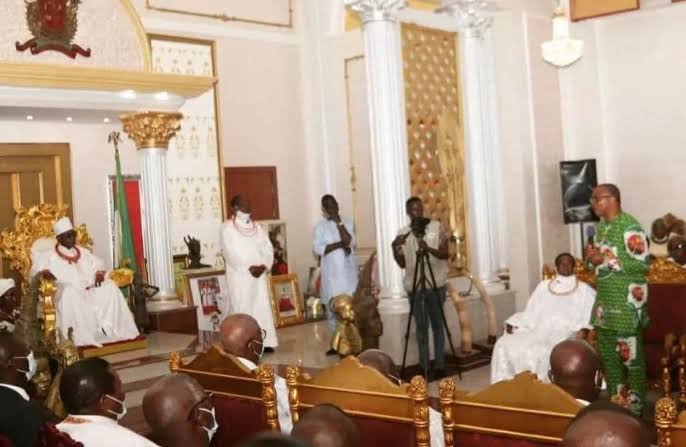
A reported exchange between the Oba of Benin and former Anambra State Governor, Peter Obi, has drawn attention to issues of public accountability, personal integrity and the management of public resources.
During a conversation with Obi, the traditional ruler reportedly asked him about a letter showing that land allocated to him during his time as governor of Anambra State was returned because he did not consider it necessary to accept the property while serving in public office.
The Oba said he had seen the letter circulating on social media and had also examined an electronic copy of the document before seeking clarification from the former governor.
Responding to the monarch, Obi confirmed the account, insisting that neither he, his wife nor any member of his immediate family received government-allocated land during his tenure as governor.
He further challenged anyone with evidence to the contrary to come forward, declaring that he would stop campaigning if such evidence were established.
The exchange has renewed public discussion about ethical leadership, the separation of personal interests from public responsibilities and the need for accountability among political officeholders.
Obi, who governed Anambra State from 2006 to 2014, has frequently highlighted prudence, transparency and responsible management of public funds as central themes of his political philosophy.
His supporters point to the reported land allocation incident as an example of the standards they believe should guide public service. However, the circumstances surrounding the allocation and return of the land, including the original letter, would be important in independently establishing the full details of the account.
The conversation also comes amid broader national debates about the cost of governance, political appointments and the use of public resources.
In particular, questions have been raised about the expenditure associated with political offices and administrative structures, including offices associated with the families of political leaders.
For Obi’s supporters, the reported exchange reinforces their argument for a different approach to leadership, one centred on accountability, restraint and responsible use of public resources.
However, the broader challenge before Nigeria’s political class remains how to translate campaign promises about integrity and transparency into verifiable policies, institutions and measurable results.
As political conversations ahead of future elections gather momentum, the exchange between the Oba of Benin and Peter Obi has once again placed public trust and accountability at the centre of national discourse.