
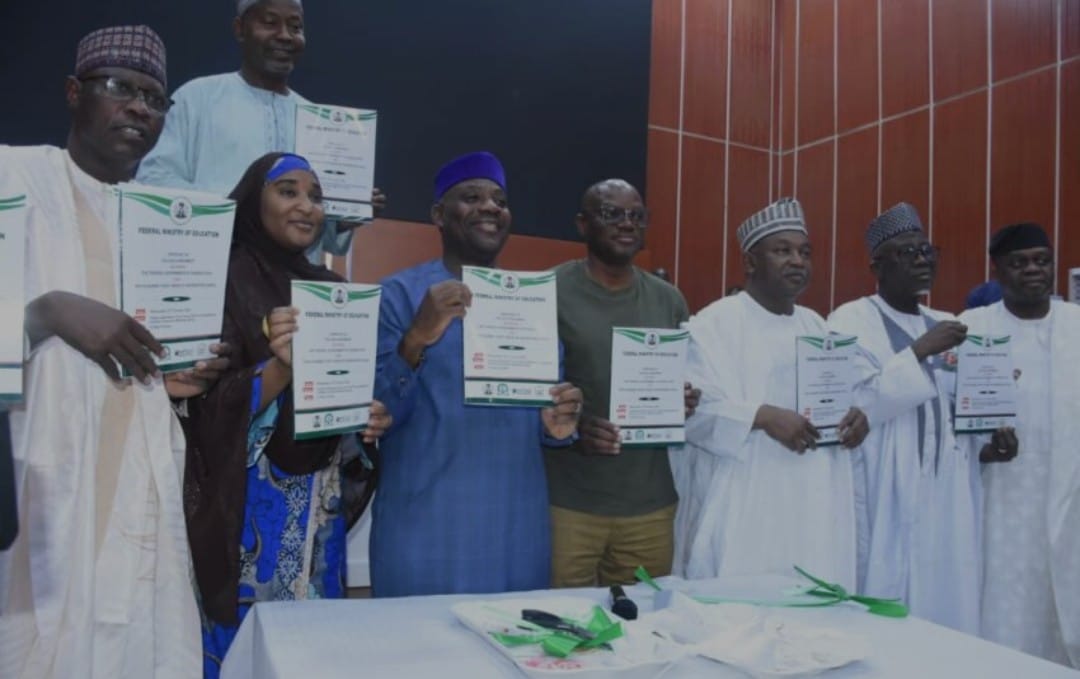
The Federal Government and the Academic Staff Union of Universities (ASUU) sign a new 2025 agreement aimed at strengthening governance, funding, and academic standards across Nigeria’s tertiary education system.
Speaking in Abuja during the unveiling of the agreement, ASUU President, Professor Chris Pinuwa, says the deal addresses long-standing concerns around mismanagement of funds, weak governance structures, and declining accountability in public universities, Mediaplusng.com reports.
Pinuwa explains that while university autonomy exists in law, its real implementation remains weak. He notes that frequent external interference, including the arbitrary dissolution of governing councils and undue influence in the appointment of vice-chancellors, continues to undermine merit-based leadership and institutional independence.
According to Mediaplusng.com, the ASUU president warns that these governance challenges often lead to internal conflicts, prolonged litigation, and staff divisions, all of which disrupt academic activities and weaken effective administration in universities nationwide.
He expresses concern over the growing trend of prolonged acting vice-chancellorships, describing it as a serious threat to transparency, continuity, and long-term planning. Pinuwa calls for stricter oversight of governing councils and principal officers to safeguard the integrity and stability of the university system.
The ASUU president stresses that leadership instability directly affects policy consistency, staff morale, and student learning outcomes. He says restoring confidence in university governance is critical to improving academic performance and global competitiveness.
On research and innovation, Pinuwa highlights sustainable funding as a major focus of the 2025 agreement. He says adequate research funding is essential for Nigerian universities to remain relevant and competitive on the global stage.
He reveals that both ASUU and the Federal Government agree to forward the National Research Council (NRC) Bill to the National Assembly. The proposed legislation seeks to dedicate at least one percent of Nigeria’s Gross Domestic Product to research, innovation, and development.
Pinuwa describes the NRC Bill as a major step toward addressing decades of underfunding in research and development. He expresses confidence that members of the National Assembly will fast-track the bill to support national growth driven by innovation and knowledge.
The ASUU president also raises concerns over promotion practices in some newly established federal universities of education. He alleges that due process and established academic standards for professorial appointments are being compromised in some institutions.
According to him, the conversion of colleges of education into universities must not lead to a dilution of academic standards or shortcuts in promotions. He urges vice-chancellors and governing councils of affected institutions to urgently review such promotions to protect credibility and institutional integrity.
ASUU maintains that the success of the 2025 agreement depends on genuine commitment from all stakeholders. The union insists that addressing governance failures, leadership instability, and inadequate research funding is key to rebuilding trust, improving academic quality, and ensuring sustainable development in Nigeria’s higher education sector.
The Federal Government and ASUU say the agreement marks a renewed effort to reposition Nigerian universities as centres of excellence capable of driving national development and competing globally.