
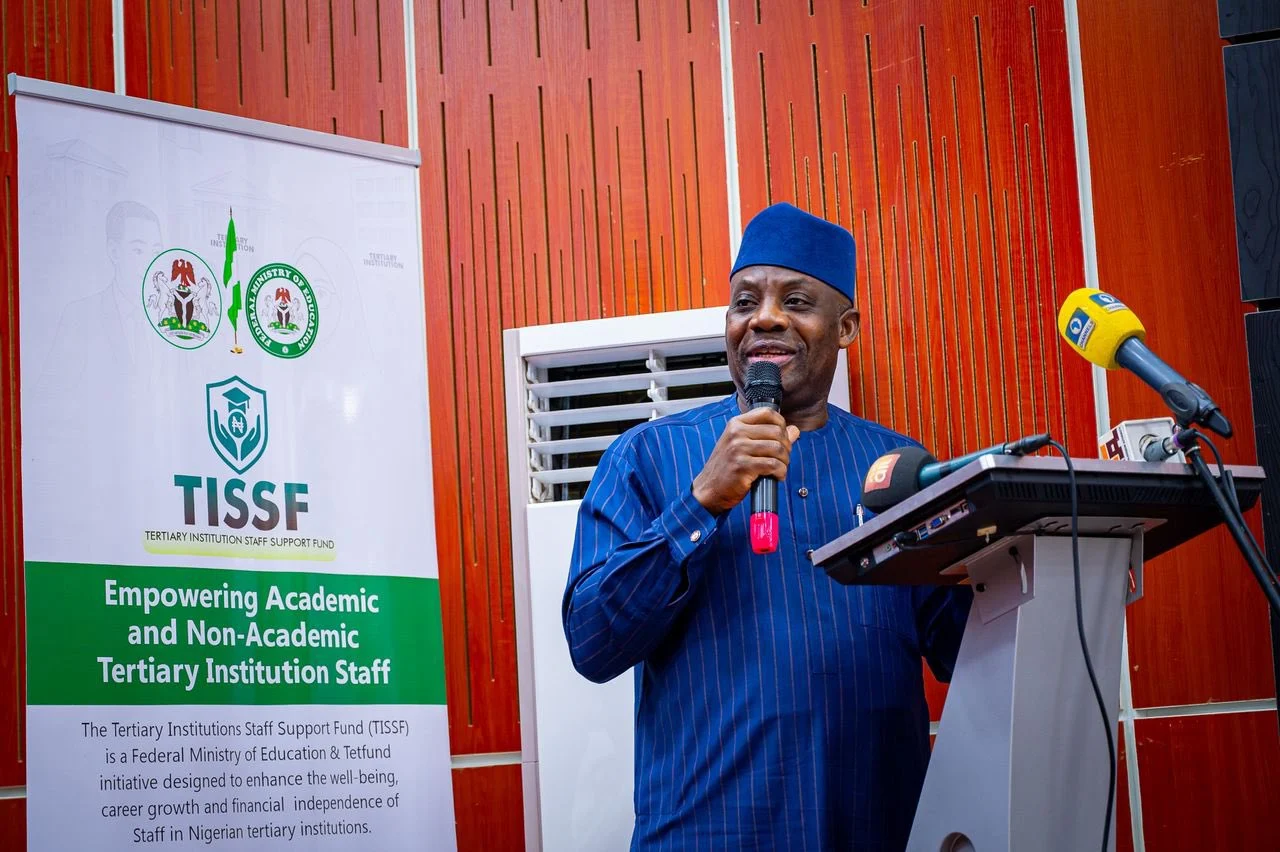
The Federal Government has inaugurated a Book Ranking and Selection Committee to improve the quality, standardisation, and affordability of textbooks in Nigerian schools.
Mediaplusng.com reports that the initiative seeks to reform the current textbook approval process, which has allowed poor-quality materials and excessive costs for parents to persist. Speaking at the inauguration in Abuja on Monday, Education Minister Dr. Tunji Alausa said some subjects currently have as many as 50 approved textbooks without clear benchmarks, leaving low-quality books alongside high-quality materials.
The Minister criticised publishers for bundling consumables and workbooks with core textbooks, forcing parents to buy new books annually. He explained that the new committee would cap the number of approved textbooks per subject, introduce transparent ranking, and protect students and parents from exploitative practices.
“You are expected to critically review existing frameworks, define clear quality benchmarks, recommend stronger assessment and ranking systems, and ensure genuine content improvement before new editions are approved,” Alausa said. “You will also address pricing transparency, edition control, and separation of durable textbooks from consumables.”
Mediaplusng.com adds that only seven textbooks per subject will be officially ranked for school use, particularly under the Universal Basic Education Commission (UBEC) framework. Ranked books will remain in use for at least three years, except where major curriculum or technological changes require updates.
The committee is chaired by Minister of State for Education, Prof. Suwaiba Ahmad, with members drawn from NERDC, UBEC, National Teachers’ Institute, and the National Senior Secondary Education Commission. Prof. Ahmad pledged that the panel would ensure learners have access to high-quality textbooks and end arbitrary book selection in schools.
NERDC Executive Secretary Prof. Salisu Shehu said the reforms would guarantee that only the best instructional materials are adopted nationwide, promoting consistency, affordability, and improved learning outcomes for students across Nigeria.
The government aims to restore confidence in the education system while reducing financial burdens on parents and creating a transparent, merit-based process for textbook selection.