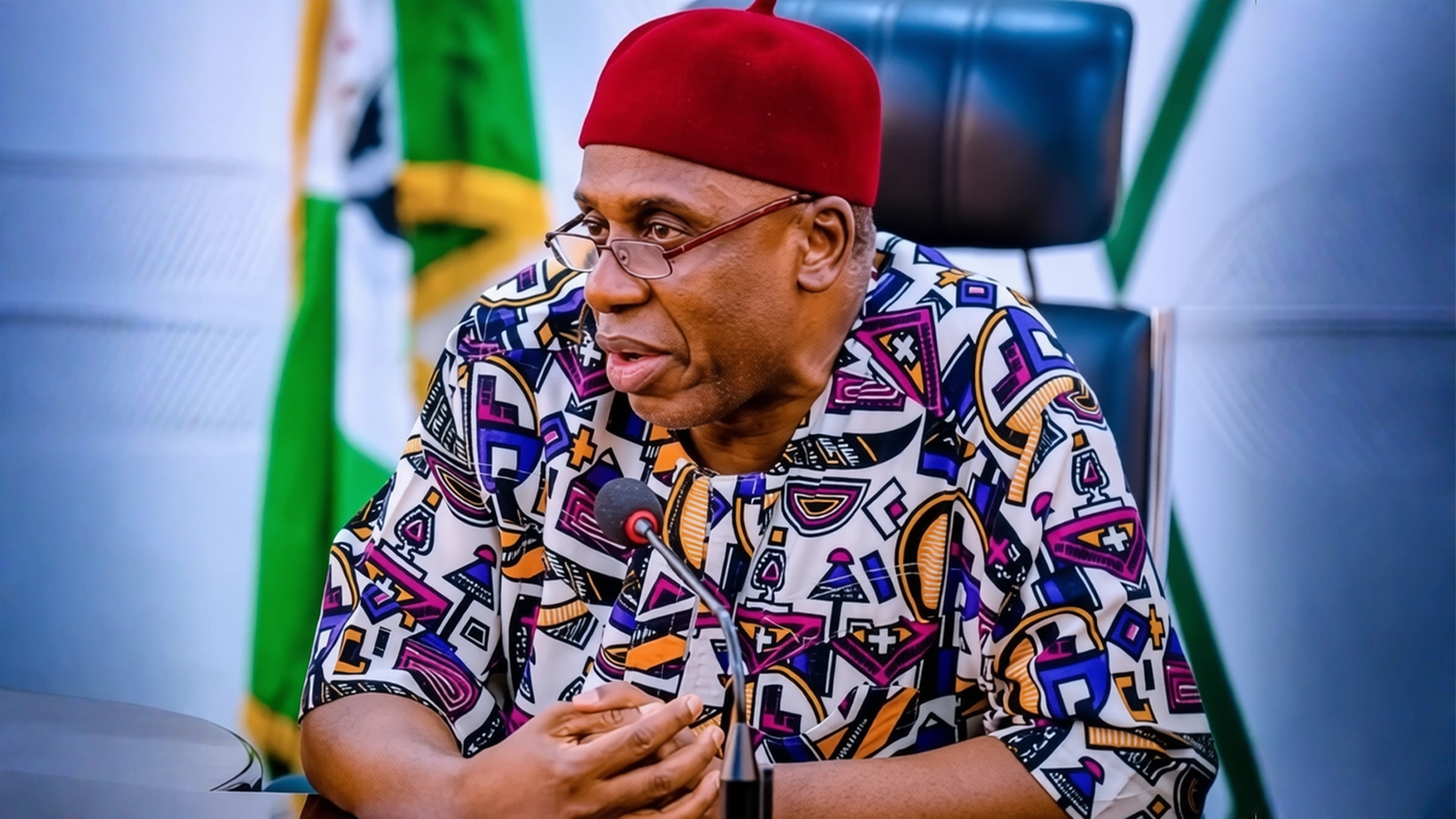
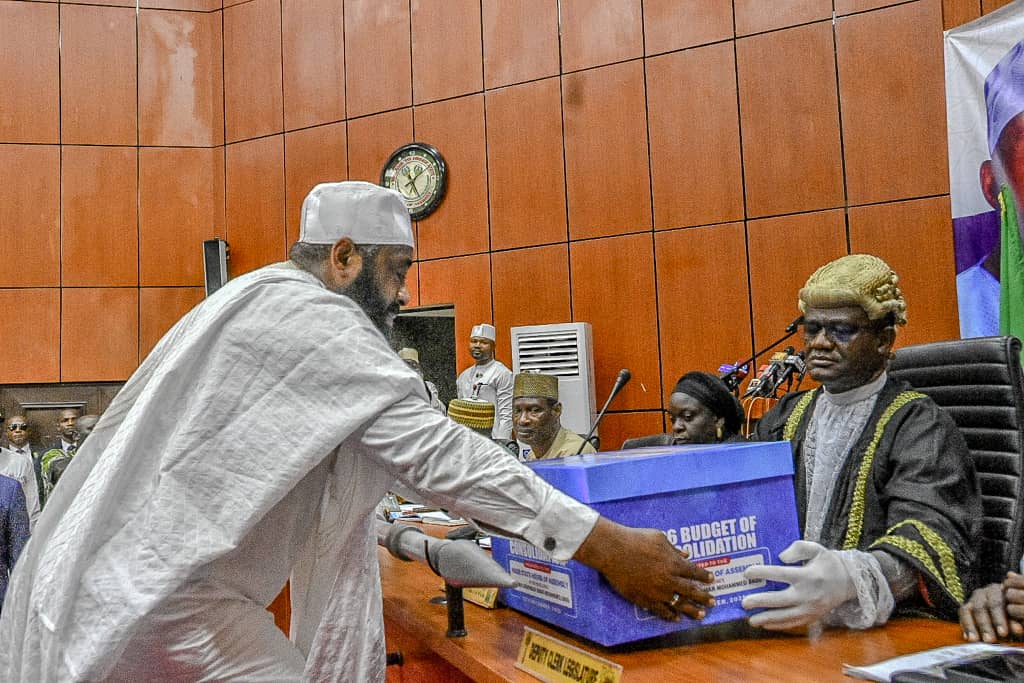
Niger State Governor, Mohammed Umaru Bago, presents a proposed ₦1.03 trillion 2026 Appropriation Bill to the Niger State House of Assembly, outlining a development-focused plan aimed at consolidating ongoing projects and accelerating economic growth across the state.
According to Mediaplusng.com, the budget, tagged the “Budget of Consolidation,” prioritises infrastructure development, agriculture, job creation, and improved social services as the government seeks to raise living standards for residents of the state.
Governor Bago tells lawmakers that the total budget estimate stands at ₦1.031 trillion, with ₦270 billion allocated for recurrent expenditure, representing 26.19 percent, while ₦761 billion, or 73.81 percent, is dedicated to capital projects. He explains that the spending plan reflects the administration’s resolve to focus more on long-term development rather than overhead costs.
Mediaplusng.com reports that the governor says funding sources for the 2026 budget include statutory allocations, Value Added Tax (VAT), internally generated revenue, FAAC receipts, capital receipts, grants, and carefully structured loans to support priority projects.
Governor Bago notes that the economic sector receives the largest share of the budget, with over ₦510 billion earmarked to boost agriculture, support agro-processing, expand job opportunities, and stimulate private sector growth. He adds that this allocation aligns with his administration’s vision of positioning Niger State as a leading agricultural and economic hub.
The governor outlines other key priorities for the 2026 fiscal year, including the consolidation of road infrastructure projects, improved healthcare delivery, stronger education systems, enhanced internally generated revenue, completion of water and electricity projects, digitalisation of state-owned media, and sustained efforts to strengthen peace and security across the state.
Speaking during the presentation, Governor Bago says the budget is anchored on fiscal discipline, strategic investment, and targeted interventions designed to complete ongoing projects and open new economic opportunities for citizens. He urges members of the House to give the proposal speedy consideration in the interest of development.
In his response, Speaker of the Niger State House of Assembly, AbdulMalik Sarkin-Daji, commends the executive for maintaining a strong working relationship with the legislature. He describes the cooperation between both arms of government as a key factor driving progress in the state.
The Speaker assures the governor that the House will give the 2026 Appropriation Bill prompt attention, pledging to ensure due process while fast-tracking its passage to enable timely implementation. He reaffirms the Assembly’s commitment to supporting policies and programmes that promote good governance, service delivery, and sustainable development across Niger State.