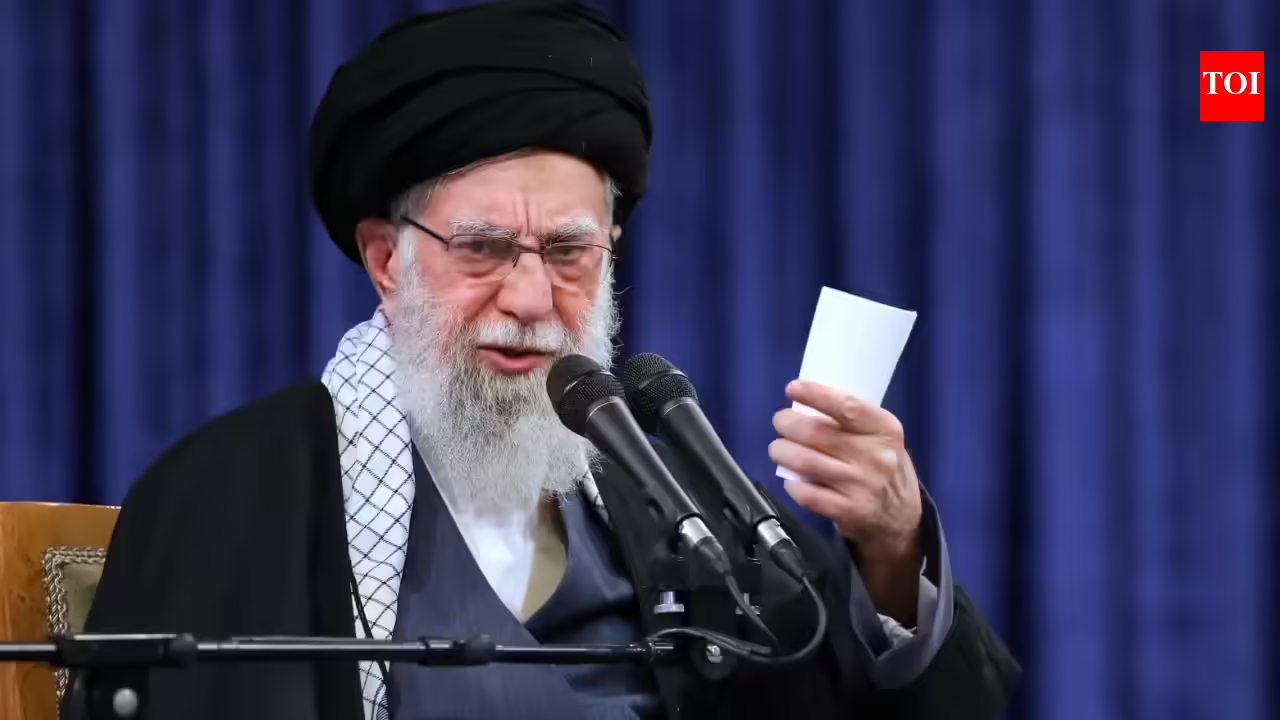
A senior Iranian official says US President Donald Trump crosses a “very dangerous red line” following the killing of Iran’s Supreme Leader, Ali Khamenei, warning that Tehran has “no option but to respond” as regional tensions intensify.
Mediaplusng.com reports that Iran’s Deputy Foreign Minister, Saeed Khatibzadeh, makes the remarks in an interview with CNN, describing the development as a turning point in relations between Washington and Tehran. He states that the action carries significant political and religious consequences across the Shiite world.
Khatibzadeh emphasizes that beyond political leadership, Khamenei holds deep religious significance for millions of Shiite followers globally. He says reactions are expected across the Middle East and other regions, given the spiritual influence associated with the Iranian leader. According to him, the development marks a serious escalation that could reshape regional security dynamics.
Mediaplusng.com gathers that Iranian authorities characterize the killing as an act of aggression that leaves Tehran with limited options. The deputy foreign minister maintains that Iran views the action as crossing a strategic threshold and insists that the country reserves the right to respond under international law.
Following reported US strikes, Iran launches what officials describe as an unprecedented wave of retaliatory operations across parts of the Middle East. Targets allegedly include countries hosting US military bases, such as Bahrain and the United Arab Emirates. The escalation reportedly disrupts civilian life, with casualties recorded and infrastructure affected in multiple locations.
Mediaplusng.com understands that Iranian officials confirm diplomatic communications with Gulf Arab states, urging them to reconsider hosting US military installations which Tehran describes as security threats. Khatibzadeh states that Iran cannot directly target US mainland territory and therefore considers US-linked facilities within the region as potential points of confrontation.
He adds that Tehran views certain foreign military bases as platforms for offensive operations against Iran, arguing that such facilities heighten regional instability. The deputy foreign minister reiterates that Iran’s actions are framed as defensive measures in response to what he describes as externally initiated aggression.
On the possibility of diplomacy, Khatibzadeh expresses skepticism, stating that previous engagements with Washington fail to yield lasting trust. He argues that the conflict represents a “war of choice,” maintaining that the escalation could have been avoided. Nonetheless, analysts note that diplomatic channels often remain critical even during periods of heightened military tension.
The unfolding situation signals a significant geopolitical flashpoint with implications for Middle East security, global oil markets, and international diplomacy. As developments continue, governments across the region and beyond monitor events closely, urging restraint while preparing for potential further escalation in the Iran–US standoff.