
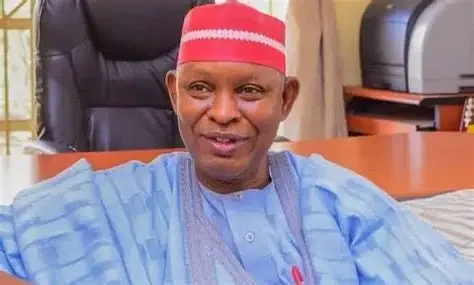
Fresh political signals emerge in Kano State as Governor Abba Kabir Yusuf is reportedly considering a defection from the New Nigeria Peoples Party (NNPP) to the ruling All Progressives Congress (APC). The move, expected later this month, could end his long-standing alliance with his political mentor and former governor, Rabiu Musa Kwankwaso, and significantly alter the balance of power in the state.
Sources within Kano politics say the development is already reshaping alignments across party lines, Mediaplusng.com reports. Governor Yusuf is the NNPP’s only sitting governor nationwide, making the potential switch a major test for the party’s strength and future relevance at both state and national levels.
Kano remains the heartland of the Kwankwasiyya movement, a political structure built over years by Kwankwaso. Governor Yusuf is widely seen as a core figure within the movement in the state, having risen through its ranks and benefited from its strong grassroots support. The movement’s rallies and symbols continue to dominate Kano’s political culture.
However, growing reports of the governor’s planned move to the APC now threaten internal unity within the Kwankwasiyya fold and the NNPP, Mediaplusng.com reports. Party insiders say consultations are ongoing, and no final announcement has been made, but political actors are already positioning themselves for possible outcomes.
There are indications that some influential figures aligned with the movement have already defected to the APC. These early moves are seen as confidence-building steps ahead of a larger political realignment that could include lawmakers, local government chairmen, and party officials loyal to the governor.
Within the APC in Kano, the mood appears optimistic. Party leaders openly welcome the possibility of Governor Yusuf joining their ranks, describing it as a boost that could consolidate APC’s influence in the state. APC sources suggest the party is preparing to receive high-profile defectors if the governor makes his decision public.
On the NNPP side, the situation is tense. The proposed defection has triggered internal disputes, including the suspension of the party’s state chairman. The suspended chairman has appealed directly to Governor Yusuf to reconsider the move, warning that it could weaken the party’s structure and betray the trust of supporters who backed the NNPP in the last election.
Rabiu Kwankwaso, the national leader of the NNPP and founder of the Kwankwasiyya movement, strongly opposes the reported defection plan. He describes it as a betrayal of shared values and collective sacrifice. Kwankwaso has also criticised internal decisions taken without broad consultation, insisting that party unity must come before personal political ambition.
Political observers say the disagreement highlights deeper issues within the NNPP, including leadership control, party discipline, and long-term strategy. Analysts note that Governor Yusuf’s position as the only NNPP governor gives him leverage, but also places him under intense pressure from competing interests.
A Kano-based political scientist, Professor Kamilu Fagge, explains that the proposed defection reflects the fluid nature of Nigerian politics. He says governors often seek platforms that offer stronger federal alignment, political protection, and access to national resources. According to him, such moves are rarely ideological and are more about survival and influence.
Professor Fagge adds that if Governor Yusuf defects, the NNPP may struggle to maintain relevance in Kano without control of state power. He also notes that the APC stands to gain significantly, not just in numbers, but in symbolic victory over a movement that has dominated Kano politics for over a decade.
Reactions among Kano residents are mixed. Some residents say the governor has the right to choose any political platform that allows him to deliver development and good governance. Others argue that switching parties so soon after winning an election undermines voter trust and weakens democratic accountability.
For supporters of the Kwankwasiyya movement, the situation is emotional. Many see the movement as more than a party structure, but a political identity built on loyalty and shared history. Any split, they fear, could divide supporters and reduce the movement’s influence ahead of future elections.
Meanwhile, reports suggest that Kwankwaso is exploring alternative political strategies if the defection happens. These options reportedly include strengthening ties with other opposition parties or forming new alliances to counter the growing influence of the APC in the North-West.
As of now, no official statement confirms Governor Yusuf’s defection. The political atmosphere in Kano remains uncertain, with intense lobbying, consultations, and negotiations ongoing behind closed doors. What is clear, however, is that any final decision will have lasting consequences for Kano State politics and Nigeria’s broader opposition landscape.