
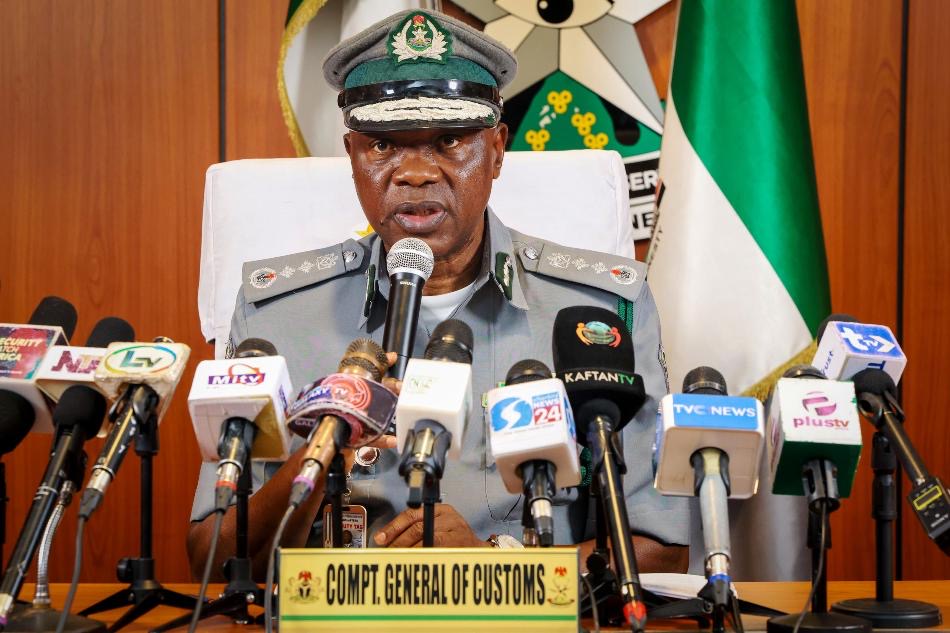
The Nigeria Customs Service (NCS) records a major revenue milestone in 2025, generating a total of ₦7.28 trillion, surpassing its annual target of ₦6.5 trillion. The Comptroller-General of Customs, Adewale Adeniyi, announces the achievement during activities marking the 2026 World Customs Day, describing the performance as a strong indicator of institutional reforms and operational efficiency.
Speaking at the event, Adeniyi says the revenue figure reflects a growth rate of over 10 percent above the projected target for the 2025 fiscal year, attributing the success to improved compliance, digital systems, stronger border management, and enhanced monitoring of trade activities across ports and borders, Mediaplusng.com reports.
He explains that the Customs Service now focuses on smarter revenue collection strategies rather than aggressive enforcement, using technology, data intelligence, and risk management tools to block leakages and improve accountability. According to him, these reforms help the Service to expand the tax base while supporting legitimate trade and economic growth.
The Comptroller-General also links the performance to closer collaboration with other security and revenue agencies, noting that inter-agency cooperation strengthens border control, reduces smuggling, and improves customs intelligence operations nationwide, Mediaplusng.com reports.
Adeniyi says the Service records improvements across major revenue corridors, including seaports, land borders, and airports, with better cargo scanning systems, automation of clearance processes, and stricter compliance enforcement helping to increase collections without disrupting trade flow.
He adds that staff capacity building, ethical reforms, and internal monitoring systems play a key role in the achievement, stressing that professionalism and discipline within the Service are critical to sustainable revenue growth.
The Customs boss further states that the revenue success aligns with the Federal Government’s broader economic recovery and revenue diversification agenda, especially in reducing dependence on oil revenue and strengthening non-oil income sources.
He notes that customs revenue now plays a growing role in funding national development, infrastructure, security, and social services, making the Service a strategic pillar in Nigeria’s fiscal stability.
According to Adeniyi, the focus for 2026 and beyond is not just on higher revenue figures, but on building a modern, transparent, and globally competitive customs system that supports trade facilitation, regional integration, and economic competitiveness.
He assures Nigerians that the Service will continue reforms that promote transparency, digital transformation, and stakeholder engagement while strengthening border security and trade efficiency.
The 2026 World Customs Day celebration also highlights Nigeria’s commitment to global customs standards, innovation, and cooperation with international partners to improve trade security and economic development.
With the ₦7.28 trillion revenue performance, the Nigeria Customs Service positions itself as one of the strongest-performing revenue agencies in the country, reinforcing its role in national development and fiscal sustainability.