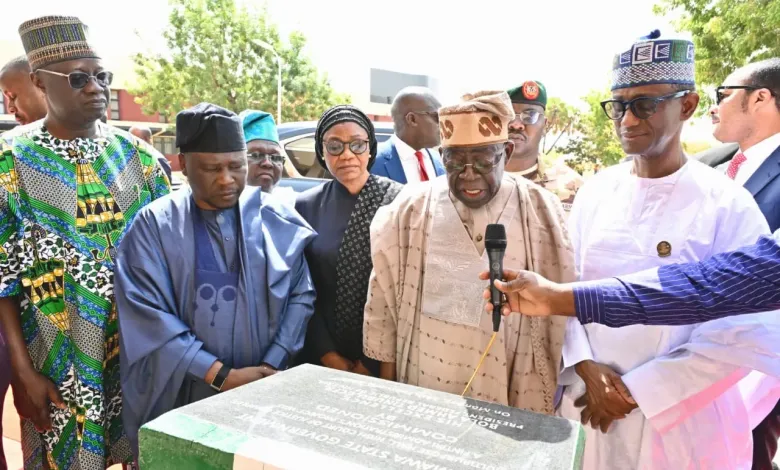
President Bola Tinubu undertakes a one-day official visit to Yola, the capital of Adamawa State, to inaugurate major completed projects and engage with political and traditional leaders. The visit comes less than 48 hours after a similar official engagement in Kebbi State, underscoring the administration’s continued focus on infrastructure development, governance, and grassroots interaction across Nigeria. The President’s itinerary includes project commissioning, strategic meetings, and community engagement aimed at strengthening national development and unity.
According to Mediaplusng.com, the visit highlights the Federal Government’s commitment to accelerating infrastructure growth and fostering collaboration between the federal and state governments. President Tinubu is scheduled to meet with top government officials, key stakeholders, and respected traditional rulers in Adamawa State. The high-level interaction provides an opportunity to discuss developmental priorities, security, economic growth, and the welfare of citizens in the North-East region.
During the visit, the President inaugurates several landmark projects in Yola and Jimeta. Among the flagship projects is the newly constructed eight-lane Galadima Aminu Road, a strategic link connecting Gimba to the state capital. The modern road infrastructure is expected to ease traffic congestion, improve connectivity, boost commercial activities, and enhance urban mobility within Adamawa State. The project reflects ongoing investments in road infrastructure as part of broader efforts to stimulate economic growth and improve transportation networks nationwide.
Mediaplusng.com reports that education infrastructure also takes centre stage during the visit. The President inaugurates a newly built model school comprising pre-primary, primary, and junior secondary sections. The facility is designed to provide a modern learning environment equipped to support quality education delivery. The development aligns with national objectives to strengthen the education sector, improve access to learning opportunities, and prepare young Nigerians for future competitiveness.
In addition to road and education projects, President Tinubu commissions other significant public infrastructure. These include a new multipurpose hall designed to host official functions and community events, a remodelled High Court aimed at enhancing judicial efficiency, a newly constructed officers’ complex to support security operations, and a renovated Government House that serves as the administrative headquarters of the state. Collectively, these projects demonstrate a comprehensive approach to governance, security, justice, and administrative efficiency.
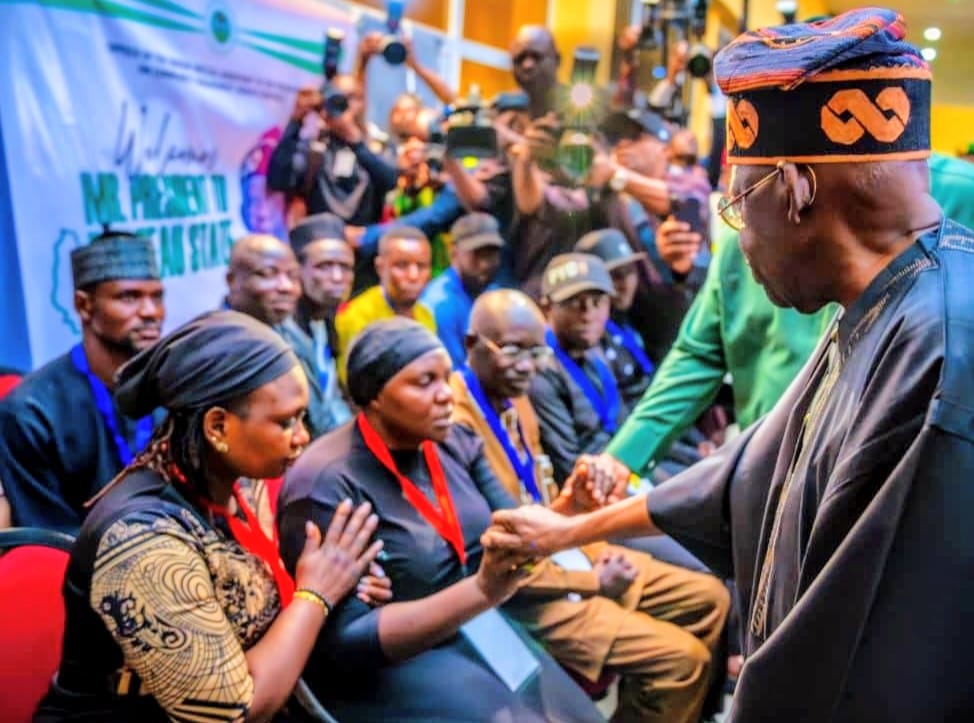
As highlighted by Mediaplusng.com, the President’s engagement with traditional rulers and community leaders plays a vital role in strengthening grassroots governance. The interaction offers a platform for dialogue on peacebuilding, security cooperation, youth empowerment, and economic opportunities. Traditional institutions remain central to community development and conflict resolution, particularly in the North-East, making their involvement crucial to sustainable progress.
The visit to Adamawa State reinforces President Tinubu’s commitment to inclusive governance and nationwide development. By commissioning critical infrastructure and engaging directly with stakeholders, the administration emphasizes accountability, project delivery, and citizen-centered leadership. Infrastructure such as expanded road networks, improved educational facilities, judicial upgrades, and enhanced security accommodations are expected to generate employment opportunities, attract investment, and improve overall living standards.
Upon completion of the inauguration ceremonies and stakeholder interactions, President Tinubu returns to Abuja. The one-day visit marks another step in the Federal Government’s broader strategy to drive infrastructure expansion, deepen federal-state collaboration, and promote socio-economic development across Nigeria. The Adamawa engagement signals sustained efforts toward national transformation, regional growth, and long-term development planning.