
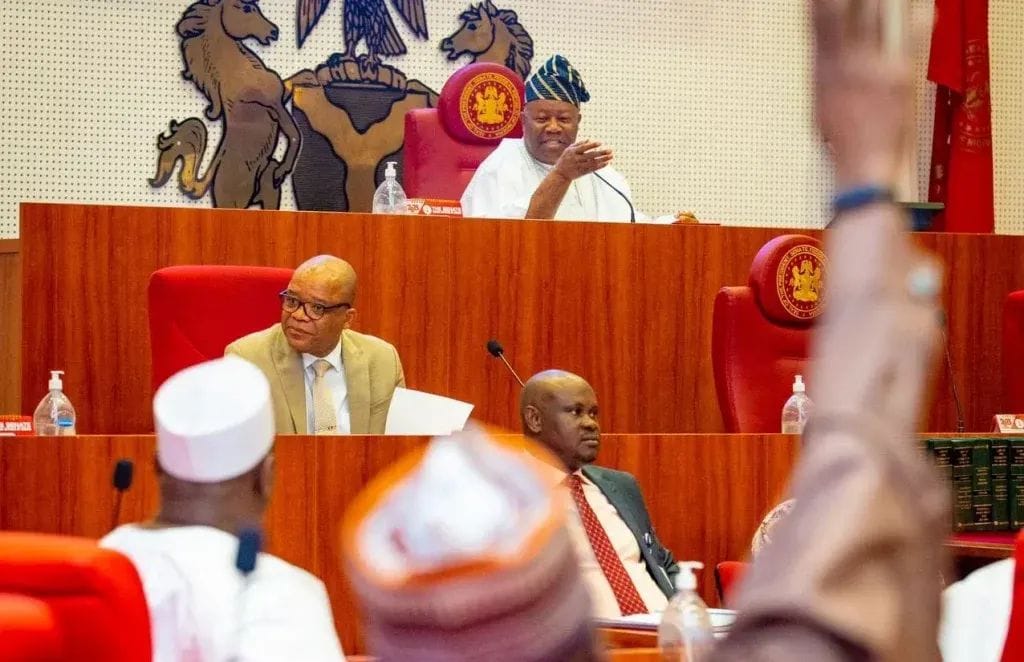
The Senate moves to review Nigeria’s revenue-sharing formula, proposing a higher allocation for the Federal Government to address rising national responsibilities and funding gaps. The proposal emerges amid debates over how revenues from the Federation Account should be shared among the federal, state, and local governments.
Mediaplusng.com reports that the proposal is contained in a constitutional amendment bill titled Constitution of the Federal Republic of Nigeria, 1999 (Alteration) Bill, 2026. Senator Sunday Karimi, who represents Kogi West, sponsors the bill, which passes first reading during plenary at the National Assembly.
The bill seeks to adjust the existing revenue formula, under which the Federal Government currently receives 52.68 percent, states get 26.72 percent, and local governments receive 20.60 percent. The proposed change aims to increase the federal share to support expanding national obligations.
Mediaplusng.com also reports that the proposal comes at a time when many stakeholders continue to demand a revenue formula that favours states and local governments. However, the sponsor argues that the Federal Government now carries a heavier burden that requires stronger financial capacity.
Speaking during a media briefing, Senator Karimi says the Federal Government faces mounting responsibilities that stretch available resources. He points to the rehabilitation of dilapidated Trunk A roads across the country, rising security expenditures, and growing social and economic demands.
According to him, the current revenue allocation no longer reflects the realities of governance at the federal level. He explains that national infrastructure, defence, and security responsibilities require significant funding, which existing allocations fail to adequately support.
The lawmaker argues that without an increased share of national revenue, the Federal Government may struggle to sustain critical projects and programmes that cut across all states. He insists that a stronger federal purse ultimately benefits the entire country through improved infrastructure and security.
Ahead of the bill’s second reading, Senator Karimi also raises concerns about how some states utilise funds received from the Federation Account. He alleges that despite regular allocations, certain states show limited development outcomes.
He says this raises questions about efficiency, accountability, and value for money at subnational levels of government. According to him, reviewing the revenue formula should go hand in hand with stronger fiscal responsibility and transparency across all tiers of government.
The proposed amendment is expected to generate intense debate in the coming weeks, especially among state governments and advocates of fiscal decentralisation. Many argue that states and local councils need more funds to deliver services closer to the people.
Despite these concerns, supporters of the bill maintain that the Federal Government’s role as the backbone of national stability justifies a higher share of revenue. They argue that security, major highways, and national economic reforms depend largely on federal funding.
The Senate is expected to subject the bill to further legislative scrutiny during its second reading, including public hearings and stakeholder engagement. Lawmakers say these consultations will allow Nigerians to contribute to discussions on revenue sharing and fiscal balance.
As debates continue, the proposal highlights long-standing tensions over resource control, fiscal federalism, and governance efficiency in Nigeria. The outcome of the bill may shape future revenue allocation and redefine financial relations among the three tiers of government.
The Senate leadership says any amendment to the revenue formula will follow due process and constitutional provisions. Lawmakers stress that the final decision must balance national interest, equity, and sustainable development.