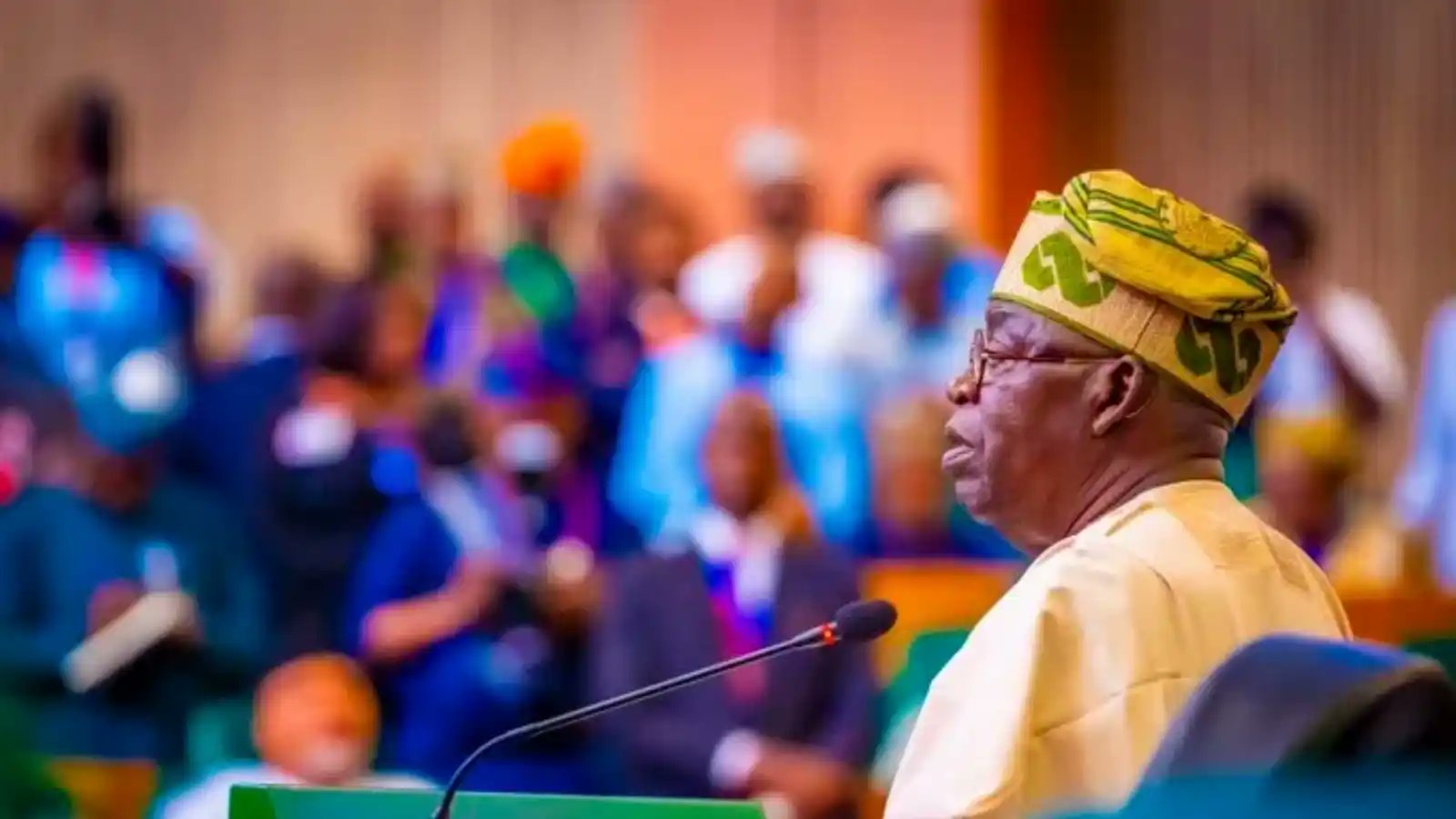
President Bola Tinubu is seeking the approval of the Senate for a significant upward adjustment to the 2026 national budget, proposing an increase of nine trillion naira.
The request, formally transmitted to the NASS and read during plenary, outlines a plan to raise the total budget size from 58.4 trillion naira to 67.4 trillion naira, marking one of the largest proposed fiscal expansions in recent years. According to Mediaplusng.com, the move reflects the administration’s effort to strengthen economic planning and address existing financial obligations.
In his communication to lawmakers, President Tinubu explains that the adjustment is designed to enhance fiscal transparency and improve the execution of key government programmes.
The President identifies regularisation of outstanding legal commitments as one of the primary reasons for the increase, noting that unresolved obligations from previous budgets could hinder the smooth implementation of the 2026 fiscal plan.
According to Mediaplusng.com, the administration is seeking to ensure that such liabilities are properly accounted for within the current budget framework, reducing the risk of future fiscal disruptions.
Another key objective of the proposal is to consolidate existing government indebtedness, bringing it fully into the fiscal structure to improve clarity and accountability in public finance management.
By integrating these financial obligations into the budget, the government aims to present a more comprehensive and realistic picture of Nigeria’s fiscal position.
The President also indicates that the proposed increase will provide funding for a limited number of strategic and priority projects considered essential for national development.
These projects are expected to support infrastructure, economic growth, and service delivery, although specific allocations are subject to legislative review and approval.
In addition, the proposal seeks to align the 2026 financing plan with broader macroeconomic goals, particularly in maintaining fiscal stability and reducing pressure on the domestic financial market.
Economic analysts note that balancing increased spending with financial stability remains a critical challenge, especially in a complex global economic environment.
The Senate’s consideration of the request is expected to involve detailed deliberations, including committee reviews and possible consultations with economic experts and government agencies.
Lawmakers will assess the implications of the proposed increase on debt sustainability, inflation, and overall economic performance.
The development comes at a time when governments globally are adjusting fiscal strategies to respond to economic pressures, making Nigeria’s budgetary decisions particularly significant.
If approved, the revised budget is expected to redefine spending priorities and influence the pace of economic reforms in the coming fiscal year.
The administration maintains that the adjustment is necessary to ensure that the budget reflects current realities while supporting long-term development objectives.
As discussions continue, attention remains on how effectively the proposed funds will be managed and whether the increase will translate into measurable improvements in economic performance and public service delivery.A wave of political defections is sweeping across Nigeria’s National Assembly, as several lawmakers announce their movement from one political party to another, signaling a significant realignment ahead of future electoral contests.
According to Mediaplusng.com, the defections cut across major political parties including the All Progressives Congress (APC), Peoples Democratic Party (PDP), Labour Party (LP), New Nigeria Peoples Party (NNPP), African Democratic Congress (ADC), Action Peoples Party (APP), and Accord Party.
In Benue State, Philip Agbese, representing Ado/Okpokwu/Ogbadibo Federal Constituency, defects from the APC to the Labour Party, marking a notable shift in the state’s political landscape.
In Osun State, Akanni Clement Ademola, representing Boluwaduro/Ifedayo/Ila Federal Constituency, moves from the PDP to the Accord Party, while Oladebo Lanre Olomololaye of Ayedaade/Irewole/Isokan also defects from PDP to Accord.
In Imo State, Ugochinyere Michael Ikeagwuonu, representing Ideato Federal Constituency, leaves the PDP for the Action Peoples Party, while Nwogu Mathew of Aboh Mbaise/Ngor Okpala Federal Constituency moves from the Labour Party to the APP.
According to Mediaplusng.com, in Anambra State, Deputy Minority Whip George Ozodinobi defects from the Labour Party to the ADC, alongside Harris Okonkwo, who represents Idemili North/Idemili South Federal Constituency and also joins the ADC.
In Gombe State, Yaya Bauchi Tongo defects from the PDP to the ADC, representing Gombe/Kwami/Funakaye Federal Constituency, while in Lagos State, Seyi Sowunmi of Ojo Federal Constituency moves from the Labour Party to the ADC.
In Kaduna State, Mustapha Abdullahi, representing Ikara/Kubau Federal Constituency, defects from the APC to the ADC, adding to the growing list of lawmakers joining the party.
In Sokoto State, a series of defections is recorded as Mani Maishinko Katami of Binni/Silame Federal Constituency, Abdussamad Dasuki of Kebbe/Tambuwal, and Umar Yusuf Yabo of Yabo/Shagari Federal Constituency all move from the PDP to the ADC.
Meanwhile, shifts toward the APC are also gaining momentum.
In Adamawa State, Mohammed Bassi, representing Mayo Belwa/Ganye/Jada/Toungo Federal Constituency, defects from the PDP to the APC.
In Kano State, multiple lawmakers switch from the NNPP to the APC, including Ghali Tijjani Mustapha of Ajingi/Albasu/Gaya, Shehu Bello of Fagge Federal Constituency, Dankawu Idris of Kumbotso, Hussain Hassan Shehu of Nassarawa Federal Constituency, Rabiu Yusuf of Sumaila/Takai, Garba Mohammed Chiroma of Gezawa/Gabasawa, Ibrahim Mohammed of Gwale Federal Constituency, and Tijjani Abdulkadir Jobe representing Tofa, Dawakin-Tofa, and Rimingado.
Jaafaru Yakubu of Bali/Gassol Federal Constituency and Sadiq Abbas Tafida of Jalingo/Yorro/Zing Federal Constituency both defect from the PDP to the APC, reinforcing the party’s growing presence in the region.
In Kebbi State, Ibrahim Mohammed of Birnin-Kebbi/Kalgo/Bunza Federal Constituency also moves from the PDP to the APC, while in Zamfara State, Bello Shinkafi of Shinkafi/Zurmi Federal Constituency follows the same path.
In addition, the Deputy Minority Leader, Aliu Madaki, representing Dala Federal Constituency, defects from the NNPP to the APC, marking a high-profile shift within the legislative leadership structure.
Observers describe the widespread defections as a strategic repositioning.
Political analysts note that the movement of lawmakers across party lines reflects internal party dynamics, ideological shifts, and preparations for future elections, particularly as political actors seek stronger platforms and alliances.
Concerns are also emerging regarding party stability, voter loyalty, and the broader implications for Nigeria’s democratic process, as frequent defections continue to reshape the political landscape.
Despite differing interpretations, the trend underscores the fluid nature of party politics in Nigeria, where alliances and affiliations remain subject to change based on evolving political calculations.
As the defections continue, attention remains on how these movements will influence legislative activities, party strength, and the balance of power within Nigeria’s political system.