
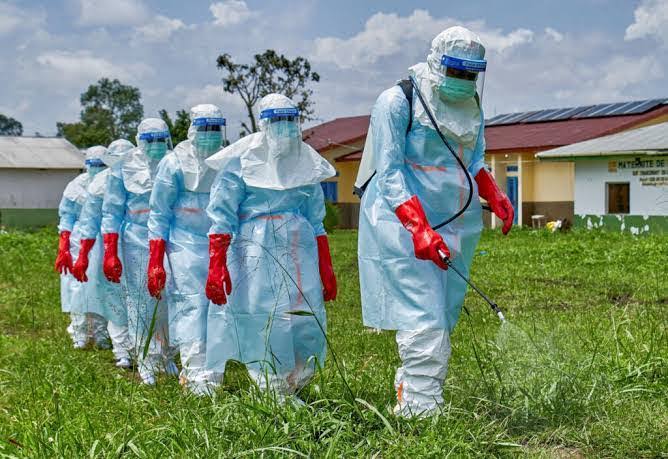
The Federal Government has confirmed Nigeria’s first reported Ebola case in the Federal Capital Territory, Abuja, triggering an emergency public health response, with 44 close contacts identified for monitoring.
The Coordinating Minister of Health and Social Welfare, Professor Muhammad Ali Pate, disclosed the development on Tuesday, October 20, 2026, following laboratory confirmation of the infection.
According to the government, the patient is a woman who recently arrived in Nigeria on an international flight from Uganda. She was admitted to a private hospital in the FCT, where she reportedly received treatment for several days before laboratory tests confirmed that she had Ebola.
The patient has since been isolated and is receiving medical care, while health authorities have commenced contact tracing to prevent further transmission.
Mediaplusng.com reports that 44 close contacts have so far been identified. They include healthcare workers, patients, caregivers and travel contacts who may have been exposed to the infected woman.
Authorities are continuing efforts to identify other people who may have come into contact with the patient. Those identified are expected to undergo monitoring in line with public health protocols.
The Federal Ministry of Health and Social Welfare, the Nigeria Centre for Disease Control and Prevention, and the FCT Health Services Secretariat are coordinating the response.
Surveillance has been intensified, while the private hospital where the patient received treatment is being supported to strengthen infection prevention and control measures.
The confirmation comes less than two weeks after the NCDC warned of the risk of Ebola entering Nigeria following the detection of an imported case in Kenya.
On October 7, the agency said Nigeria had no confirmed Ebola case at the time but had increased surveillance because of regional travel and population movements.
The latest development underscores the importance of early detection, effective disease surveillance and rapid coordination among health authorities, particularly when infectious diseases spread across national borders.
Kenya has reported nine Ebola cases, according to the information provided by Nigerian authorities. The cases are linked to an initial infection associated with travel from the Democratic Republic of Congo through Uganda.
Kenyan authorities have said there is no evidence of transmission beyond the identified cluster.
The regional situation has therefore heightened the importance of cross-border cooperation, timely information-sharing and effective monitoring of people who may have been exposed to the virus.
Ebola is a serious viral disease that can cause severe illness and death. Transmission can occur through direct contact with the blood or other bodily fluids of an infected person who is showing symptoms, or through contact with contaminated materials.
The virus does not spread through the air in the same way as measles or some other respiratory infections. However, close contact with an infected person and contaminated materials can pose a significant risk.
Symptoms may include fever, weakness, muscle pain, headache, sore throat, vomiting, diarrhoea and, in some cases, internal or external bleeding.
Because these symptoms can resemble those of other illnesses, suspected cases require prompt assessment by trained healthcare professionals.
Health authorities typically respond to Ebola cases through isolation and treatment, contact tracing, monitoring of exposed individuals, infection prevention measures and public communication.
People who believe they may have been exposed should contact public health authorities or a healthcare professional promptly and follow official instructions. Anyone experiencing compatible symptoms after a possible exposure should seek urgent medical guidance and avoid exposing others while awaiting assessment.
Members of the public are also advised to rely on verified information from the NCDC and the Federal Ministry of Health rather than unconfirmed reports circulating on social media.
As the response continues, the immediate priorities are to establish the full chain of exposure, monitor identified contacts, protect healthcare workers and determine whether any additional cases have occurred.
The identification of 44 contacts does not, by itself, mean that those individuals are infected. Contact monitoring is a standard public health measure designed to detect possible infections early and limit further spread.
The Federal Government’s response will be closely watched as health authorities work to contain the confirmed case and prevent a wider outbreak.
For now, effective contact tracing, transparent public communication and strict infection prevention measures remain critical to protecting public health in Abuja and across Nigeria.