
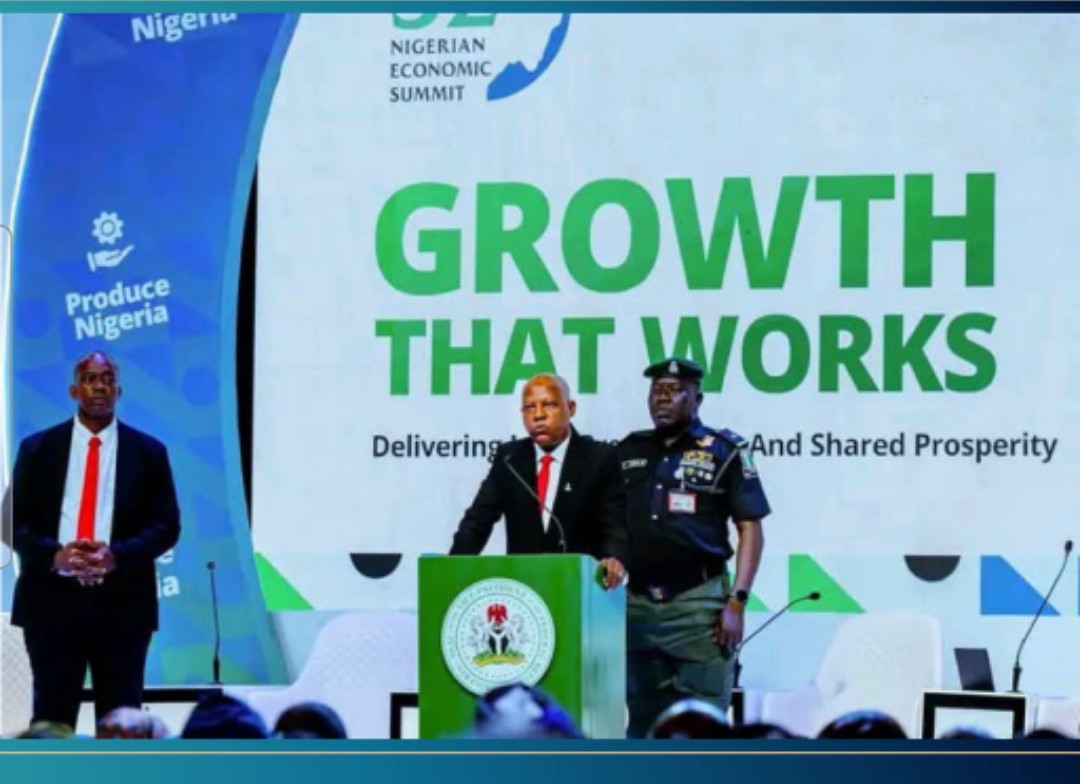
President Bola Tinubu says his administration is rewriting Nigeria’s story of economic underperformance, insisting that ongoing reforms are restoring investor confidence and laying the foundation for sustainable economic growth.
The President made the declaration at the 32nd Nigerian Economic Summit, where he highlighted progress in gross domestic product growth, investment inflows, manufacturing and efforts to diversify the nation’s economy.
Tinubu said the reforms introduced by his administration are designed to address longstanding structural challenges, strengthen economic resilience and create an environment that supports businesses, investment and job creation.
According to the President, rebuilding the economy requires difficult but necessary decisions aimed at correcting distortions, improving efficiency and positioning Nigeria for long-term prosperity.
He highlighted the importance of economic diversification, particularly expanding productive sectors beyond crude oil, strengthening local manufacturing and unlocking opportunities in agriculture, trade and other non-oil industries.
The administration has also emphasised the need to attract domestic and foreign investment by improving the business environment and restoring confidence in Nigeria’s economic direction.
The Nigerian Economic Summit provides a platform for government officials, business leaders, investors, economists and other stakeholders to examine national economic challenges and develop policy recommendations for sustainable development.
Discussions at the summit are expected to focus on economic competitiveness, private-sector participation, investment opportunities and strategies for strengthening productivity.
However, the impact of economic reforms remains a major concern for households and businesses facing high living costs, inflationary pressures and other financial challenges.
While the government points to improvements in selected macroeconomic indicators, the broader test will be whether these gains translate into better living conditions, higher purchasing power, decent jobs and expanded opportunities for Nigerians.
Businesses are also looking for improved access to finance, reliable infrastructure, affordable energy and a more predictable operating environment to support expansion and employment.
For the Tinubu administration, sustaining economic growth will depend not only on policy implementation but also on ensuring that the benefits reach ordinary citizens across the country.
The President’s remarks at the summit underscore his administration’s position that economic reforms are central to transforming Nigeria’s development trajectory.
As stakeholders deliberate on the country’s economic future, attention remains on how government policies, private-sector investment and improved productivity can translate into inclusive and sustainable growth.