Nigeria’s electricity sector is witnessing renewed efforts by the Federal Government to address persistent power supply challenges, strengthen infrastructure and improve electricity delivery to homes, businesses and industries.
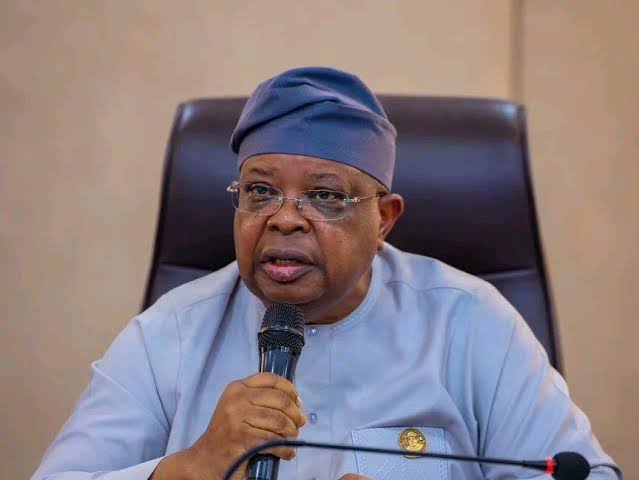
The Minister of Power, Joseph Tegbe, says the government is pursuing a comprehensive strategy focused on stabilising the national grid, expanding transmission capacity, improving generation and attracting fresh investment into the electricity sector.
Speaking at the Nigeria Energy Leadership Summit 2026 in Lagos, Tegbe identified ageing infrastructure, inadequate gas supply, transmission bottlenecks, distribution losses and outstanding debts to power sector operators as major challenges requiring urgent attention.
The minister outlined four priority areas: strengthening energy corridors, improving the financial sustainability of the electricity market, optimising existing infrastructure and expanding capacity to meet growing national demand.
Among the government’s initiatives is a nationwide technical audit of electricity infrastructure to identify facilities requiring urgent repairs, replacement or upgrades.
The Federal Government is also targeting increased transmission capacity, with plans to expand the network from approximately 5,000 megawatts to more than 19,000 megawatts.
Tegbe disclosed that the government had paid approximately ₦1.2 trillion towards outstanding electricity sector debts, out of an estimated ₦2.3 trillion owed to operators, as part of efforts to improve liquidity and support electricity generation.
Three major economic energy corridors have also been identified for priority interventions: Lagos-Ogun, Benin-Enugu-Port Harcourt and Abuja-Kaduna-Kano.
The government is equally pursuing renewable energy projects, including solar mini-grids for universities, teaching hospitals and underserved communities, to complement electricity supplied through the national grid.
At the Nigeria Energy Summit, Tegbe emphasised that the priority was to move beyond policy announcements towards measurable improvements in electricity supply and system performance.
The Federal Government has also set a long-term target of generating 70,000 megawatts by 2060 to support industrialisation, technological development and rising electricity demand.
However, the success of these initiatives will ultimately be measured by their impact on ordinary Nigerians, particularly households and businesses that continue to grapple with unreliable electricity supply and the high cost of alternative energy.
Reliable electricity remains critical to economic growth, industrial productivity, job creation and improved living standards.
The challenge before the government is to translate its infrastructure investments and reform programmes into consistent, affordable and dependable electricity for Nigerians.