Nigeria’s federal government initiates a strategic adjustment in its executive structure as part of ongoing efforts to enhance governance and economic performance.
According to Mediaplusng.com, Bola Tinubu approves a minor cabinet reshuffle within the Federal Executive Council Nigeria, resulting in key changes in ministerial positions.
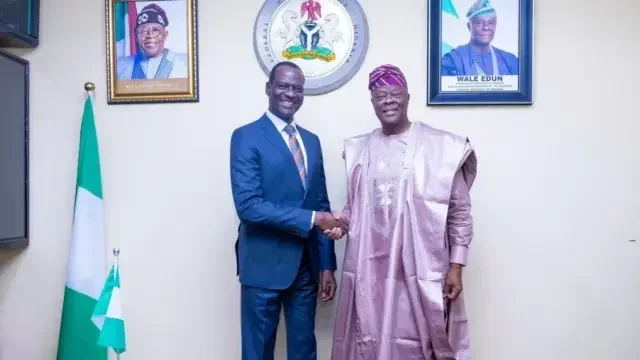
The decision leads to the exit of two cabinet members, including Wale Edun, who previously serves as Minister of Finance and Coordinating Minister of the Economy, and Ahmed Musa Dangiwa, who oversees the Ministry of Housing and Urban Development.
In the new arrangement, Taiwo Oyedele is elevated to assume the role of Minister of Finance and Coordinating Minister of the Economy.
Before this appointment, Oyedele serves as Minister of State in the same ministry, gaining experience in fiscal policy and economic coordination.
Observers note that continuity within the ministry may support ongoing economic reforms and policy implementation.
The reshuffle also introduces a new face into the cabinet, as Muttaqha Rabe Darma is named as ministerial nominee and designated to head the Ministry of Housing and Urban Development.
Officials indicate that the transition process is expected to be completed within a specified timeframe.
A directive from the Office of the Secretary to the Government of the Federation mandates that all handover procedures be finalized on or before April 23, 2026.
The Secretary to the Government of the Federation, George Akume, explains that the reshuffle aims to strengthen coordination and improve service delivery.
He emphasizes that the changes are designed to enhance synergy within the cabinet and ensure more impactful governance outcomes.
Policy analysts interpret the move as part of broader efforts to align government operations with national development priorities.
They highlight the importance of effective leadership in key ministries, particularly those responsible for economic management and infrastructure development.
The Ministry of Finance plays a central role in shaping fiscal policy, managing public resources, and driving economic stability.
Similarly, the Ministry of Housing and Urban Development is critical for addressing urbanization challenges, housing deficits, and infrastructure needs.
Experts say leadership changes in these ministries can influence policy direction and implementation efficiency.
The presidency expresses appreciation to the outgoing ministers for their service.
Officials acknowledge their contributions to national development and wish them success in future endeavors.
The administration also signals that the process of cabinet review and adjustment may continue as part of its governance strategy.
Analysts note that periodic reshuffles are a common feature in executive governance, allowing leaders to recalibrate priorities and optimize performance.
They add that such changes can help address emerging challenges and improve responsiveness to public needs.
The reshuffle is carried out in accordance with constitutional provisions.
Sections 147 and 148 of Nigeria’s Constitution grant the president the authority to appoint and reassign ministers.
Legal experts affirm that the exercise of these powers is essential for maintaining flexibility in governance.
The announcement generates interest among stakeholders, including policymakers, economists, and the general public.
Many are keen to observe how the new appointments will impact policy implementation and economic outcomes.
The elevation of Taiwo Oyedele, in particular, draws attention due to his background in economic policy and taxation.
Observers expect his leadership to focus on strengthening fiscal discipline and enhancing revenue generation.
Meanwhile, the nomination of Muttaqha Rabe Darma signals a potential shift in housing policy priorities.
Stakeholders in the housing sector anticipate initiatives aimed at improving access to affordable housing and urban development.
As the transition unfolds, government officials emphasize the importance of continuity and stability.
They assure that ongoing projects and programs will proceed without disruption.
The cabinet reshuffle reflects the administration’s effort to reinforce governance structures, improve coordination, and deliver on economic and development goals in Nigeria.