Uganda has tightened travel restrictions for passengers with a history of travel to the Democratic Republic of the Congo, DRC, barring them from transiting through the country as investigations continue into an Ebola case confirmed in Nigeria.
The measure, announced by Uganda’s Ministry of Health on Friday, is part of efforts to strengthen surveillance and prevent the potential spread of the Bundibugyo strain of Ebola virus disease.
The ministry has also reinstated traveller locator forms to facilitate contact tracing and enable health authorities to follow up with individuals who may have been exposed to the virus.
In a statement signed by Uganda’s Director General of Health Services, Charles Olaro, the ministry said investigations were ongoing to establish the circumstances surrounding the infection of the Nigerian patient.
According to the ministry, available information indicates that the traveller did not exhibit symptoms when she departed Uganda. Authorities are now working with Nigerian health officials to establish her complete travel history, movements and possible exposure to the virus.
Uganda has also requested additional information from Nigeria, including detailed travel records and genomic sequencing results, where available.
Despite the investigation, the Ugandan government maintains that the country remains Ebola-free.
Uganda previously battled an outbreak of Bundibugyo virus disease declared on 15 May 2026, following the importation of cases from the Democratic Republic of the Congo.
The outbreak recorded 20 confirmed cases, including two deaths, before Uganda declared it over in August after 42 days without a new locally acquired case.
However, the continuing spread of Ebola in the region has prompted renewed vigilance among public health authorities.
According to figures cited from the World Health Organisation, the DRC had recorded 9,704 confirmed cases and 4,687 deaths across eight provinces as of 20 October.
Uganda’s latest measures include reinforced infection prevention and control procedures at entry and exit points, health facilities and other locations, alongside intensified surveillance across the country.
The ministry has also warned that provisions of Uganda’s Public Health Act could be enforced against individuals who violate public health requirements.
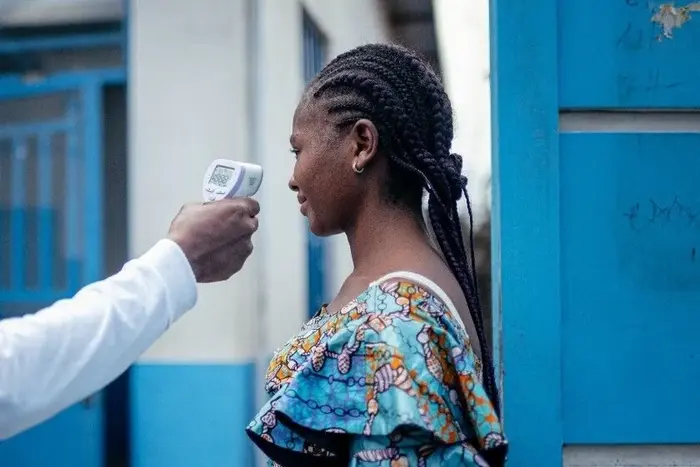
Communities have been urged to report suspected unauthorised border crossings, while travellers are advised to remain calm, practise proper hand hygiene and comply with screening procedures.
The restrictions follow an earlier clarification issued by Uganda on 21 October, after Nigeria announced that an Ebola patient had arrived on an international flight from Uganda.
Ugandan authorities said the traveller’s passage through the country did not establish that she contracted the virus there. Preliminary information indicated that she had travelled to eastern DRC for business before passing through Uganda and had not displayed symptoms while in the country.
Meanwhile, Nigeria’s health authorities have reported genomic findings showing that the virus detected in the Nigerian patient is highly similar to the virus identified in Kenya’s first imported case.
Nigeria’s Coordinating Minister of Health and Social Welfare, Muhammad Pate, stressed that the genetic similarity does not establish that the Nigerian patient contracted the infection in Kenya, noting that there was no evidence she had travelled there.
The Africa Centres for Disease Control and Prevention had earlier disclosed that it was investigating a possible link between the Nigerian and Kenyan cases, as both patients reportedly travelled through Uganda’s Entebbe International Airport on 3 October.
Kenya’s initial case was imported from the DRC through Uganda. The country has since reported nine confirmed cases, including two deaths, with eight additional infections linked to the first patient.
As investigations continue across the affected countries, health authorities are working to establish the source and possible transmission pathways of the infections.
The developments highlight the importance of cross-border cooperation, timely information sharing, effective surveillance and contact tracing in containing infectious disease outbreaks.
For travellers and communities across the region, public health officials continue to emphasise vigilance, compliance with screening measures and prompt reporting of suspected symptoms.