
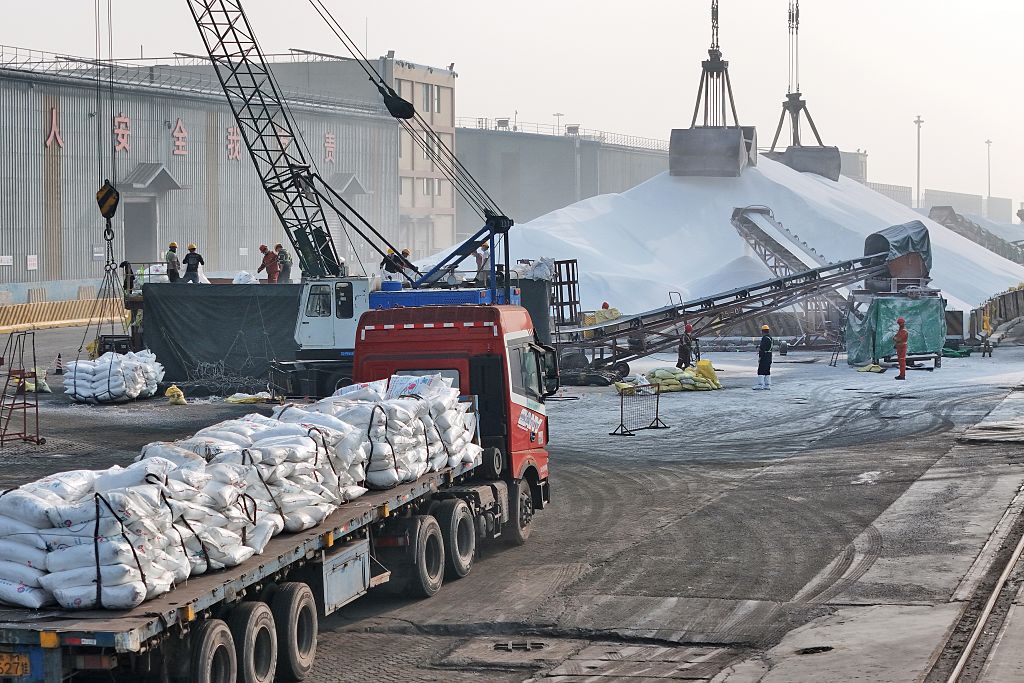
Algeria has reportedly ordered domestic fertiliser producers to stop exporting urea to France, escalating an economic confrontation linked to French President Emmanuel Macron’s support for Morocco’s position on Western Sahara.
The reported restriction threatens a trade relationship valued at approximately 219 million dollars in 2025 and could force French agricultural suppliers to seek alternative sources of the essential crop nutrient ahead of the next planting season.
Mediaplusng.com reports that, according to Reuters on October 23, 2026, the directive was disclosed by five diplomatic and industry sources. Neither the Algerian government nor the affected producers had publicly confirmed the restriction at the time of the report.
The development comes after Algeria reportedly introduced an unofficial near-total ban on French imports in July, suggesting that the diplomatic dispute between the two countries is increasingly affecting commercial relations.
A major fertiliser supply chain under threat
World Bank trade data based on the United Nations Comtrade database show that France imported approximately 481,000 tonnes of urea from Algeria in 2025, valued at about 219 million dollars.
The volume represented roughly 25 per cent of France’s urea imports, making Algeria one of its most important suppliers after Egypt, which accounted for approximately 33 per cent.
The trade expanded significantly from 2024, when France imported about 302,000 tonnes of Algerian urea worth approximately 131.3 million dollars.
Urea is a nitrogen-rich fertiliser widely used to improve crop growth and agricultural productivity. Its availability is particularly important to farmers seeking to maintain yields amid rising production costs and pressure on food supply chains.
A prolonged suspension of Algerian supplies could therefore create additional challenges for French fertiliser importers and agricultural businesses, particularly if replacement cargoes become more expensive.
France may need to increase purchases from alternative suppliers, including Egypt, the Netherlands, Germany and other international producers.
The disruption could also create opportunities for fertiliser exporters in other countries, including Nigeria, although Nigerian shipments to France were comparatively small in 2025.
Western Sahara dispute deepens diplomatic tensions
The reported restriction comes amid deteriorating relations between Algeria and France following Macron’s decision in 2024 to support Morocco’s autonomy proposal for Western Sahara under Moroccan sovereignty.
Morocco considers Western Sahara part of its territory, while the Algeria-backed Polisario Front seeks independence for the disputed region.
France’s position represented a significant diplomatic development for Rabat but provoked anger in Algiers, which has long supported the Sahrawi independence movement.
The disagreement has since contributed to tensions affecting diplomatic relations and trade between the two countries.
The reported fertiliser restriction would mark a further escalation by targeting exports from Algeria to France, rather than focusing exclusively on French goods entering the Algerian market.
Economic consequences for both countries
The potential impact extends beyond the immediate value of the fertiliser trade.
France faces the challenge of securing alternative supplies for its agricultural sector, while Algerian producers could lose access to an established European market worth more than 200 million dollars annually.
Redirecting shipments to other buyers may be possible, but prices, shipping costs, existing contracts and global demand will determine how quickly alternative markets can absorb the affected volumes.
The European Union purchased approximately 528 million dollars’ worth of Algerian urea in 2025, while other major customers included Brazil, the United States, Canada and Argentina.
These markets could offer alternative destinations, although replacing France’s demand may not be immediate or commercially straightforward.
For farmers, the central concern is whether the reported restriction will lead to higher fertiliser prices or supply shortages before the next planting season.
For businesses and policymakers, the dispute illustrates how geopolitical disagreements can spill into strategic commodities, affecting trade, industrial production and food security.
However, the full consequences will depend on whether the reported directive is formally confirmed, how long it remains in force and whether diplomatic efforts can prevent further deterioration in relations.
For now, the reported suspension places a significant fertiliser trade under pressure, adding an economic dimension to the continuing diplomatic dispute between Paris and Algiers.