Africa’s fight against Ebola is facing a major challenge, with confirmed cases surpassing 10,000 and deaths approaching 5,000, prompting the Africa Centres for Disease Control and Prevention to warn that the continent is not yet winning the battle against the deadly disease.
The Director-General of Africa CDC, Jean Kaseya, gave the warning on Wednesday during an extraordinary meeting of African health ministers convened to strengthen the continent’s response to the ongoing outbreak.
Kaseya said the latest figures showed 10,172 confirmed cases and 4,932 deaths, describing the loss of lives as a painful reminder of the urgent need for coordinated action.
Speaking to more than 40 African health ministers, he said the continent must strengthen its preparedness, improve disease surveillance and ensure that countries work together to prevent further transmission.
According to Kaseya, the ministers agreed to prepare every African country for possible Ebola cases, coordinate responses across national borders and keep borders open while strengthening surveillance systems.
He stressed that the presence of Ebola in one African country requires preparedness across the entire continent.
The warning comes as health authorities continue to monitor the spread of the Bundibugyo virus, a species of Ebola virus responsible for the current outbreak.
The outbreak was first declared in the Democratic Republic of the Congo in May 2026 and has since raised concerns about cross-border transmission.
According to figures from the World Health Organisation, the Democratic Republic of the Congo accounts for the overwhelming majority of reported infections and deaths.
As of October 26, the country had recorded 10,141 confirmed cases and 4,928 deaths, with the outbreak affecting eight provinces.
Uganda has reported 20 confirmed cases and two deaths, alongside one probable case and one probable death.
Kenya has recorded nine confirmed cases and two deaths, according to the figures provided.
Nigeria has also confirmed a case, raising concerns about the possibility of further transmission within the region.
The Nigerian case was confirmed on October 20 after a traveller with a history of travel to Uganda tested positive for the virus.
The patient was subsequently medically evacuated to Switzerland, while health authorities continued tracing and monitoring people who might have been exposed.
The Nigeria Centre for Disease Control and Prevention reported that 54 contacts linked to the case had been traced and were under follow-up as of October 26.
Meanwhile, genomic sequencing has raised fresh questions about how the virus reached Nigeria.
Nigeria’s Coordinating Minister of Health and Social Welfare, Muhammad Pate, said the virus detected in the country was closely related to the strain identified in Kenya, with the two samples differing by a single mutation.
However, Pate emphasised that this finding does not establish a direct epidemiological link between Nigeria’s case and Kenya’s first confirmed case.
Further investigations are therefore required to determine how the virus reached Nigeria.
Beyond the immediate health emergency, African health authorities are also concerned about the wider economic and social consequences of an uncontrolled outbreak.
Kaseya recalled the devastating impact of the 2014 to 2016 Ebola epidemic in West Africa, which disrupted education, separated families and caused significant economic losses.
He said about five million children were kept out of school, approximately 23,000 children lost their parents, and nearly three billion dollars in gross domestic product was lost.
The Africa CDC chief warned that the continent must learn from that experience by investing in preparedness, strengthening healthcare systems and responding rapidly to new infections.
The World Health Organisation has advised against imposing travel or trade restrictions on countries affected by the outbreak, while emphasising the importance of surveillance, preparedness and cross-border cooperation.
Health authorities are also urging countries without reported cases to strengthen their emergency response systems rather than wait for infections to emerge.
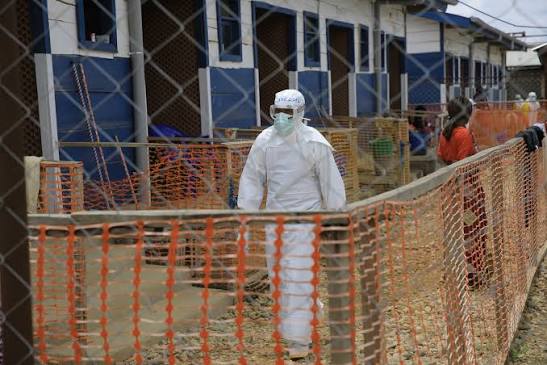
Ebola spreads through direct contact with the blood or other body fluids of an infected person who is showing symptoms, or with contaminated materials. Early detection, infection prevention, effective isolation and appropriate medical care remain critical to controlling transmission.
As the outbreak continues, the Africa CDC says coordinated action across the continent will be essential to contain the virus and prevent further loss of life.
The message from African health leaders is clear: no country can afford to treat Ebola as another country’s problem.