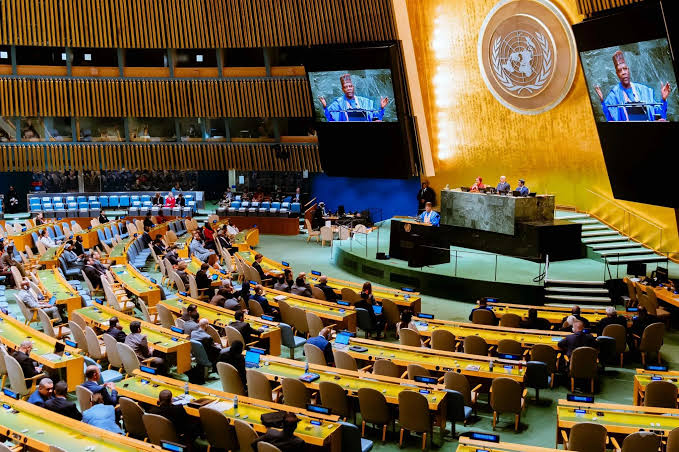
Nigeria and the majority of United Nations member states have called for an end to the United States’ decades-long economic, trade and financial embargo against Cuba.
The resolution, adopted on Wednesday, received 130 votes in favour, while 17 countries voted against it, including the United States and Israel. Another 25 countries abstained.
The vote reflects continuing international opposition to Washington’s sanctions against the Caribbean island nation, which has been grappling with severe economic and humanitarian challenges.
Most African countries supported the resolution, with Morocco reportedly the only African nation to vote against it.
The outcome also highlights the longstanding historical and diplomatic ties between Cuba and several African countries, including Nigeria.
The resolution, which has been presented and adopted annually since 1992, calls on the United States to lift its economic, trade and financial restrictions against Cuba.
Although the resolution is not legally binding, it serves as an indication of international opinion on the decades-old embargo.
However, support for the resolution has declined from previous years. More than 160 countries backed the proposal last year.
The latest vote comes amid renewed tensions following additional sanctions introduced by the administration of US President Donald Trump.
The measures reportedly targeted oil supplies to Cuba and imposed tariffs on countries selling oil to the island, further intensifying its economic difficulties.
Reacting to the vote, Cuban Foreign Minister Bruno Rodríguez said the outcome demonstrated that Washington remained isolated in its efforts to maintain the embargo.
He accused the United States of attempting to strangle the Cuban people and argued that political pressure and public campaigns would not overcome what he described as the facts surrounding the blockade.
The Cuban Embassy in the United States also welcomed the outcome, describing it as a victory for Cuba and reiterating its position that the embargo should be lifted.
However, the United States defended its position.
US Ambassador to the United Nations Mike Waltz welcomed the decisions of countries that voted against the resolution or abstained.
He said Washington was encouraged by what he described as a shift in the positions of some countries, including major economies, and expressed confidence that the trend would continue.
The contrasting reactions underscore the continuing diplomatic dispute between Washington and Havana.
For Nigeria and other countries supporting the resolution, the vote renews the call for a change in US policy towards Cuba.
However, with the resolution carrying no binding legal force, its adoption does not automatically compel Washington to lift the sanctions.
The future of the embargo will therefore depend largely on US policy decisions and the direction of diplomatic engagement between the two countries.