Dele Giwa’s Legacy Endures
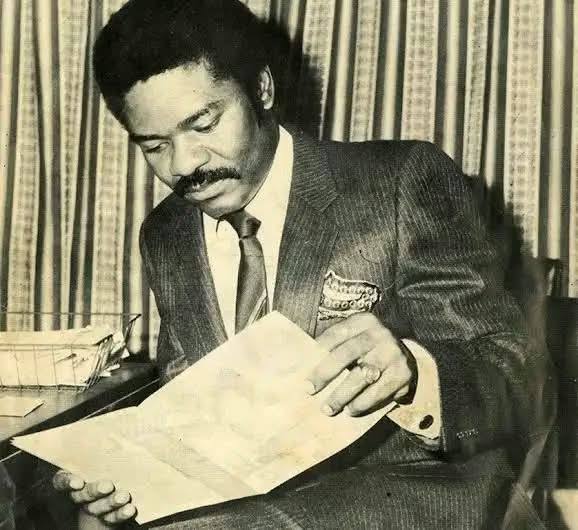
Journalists, media executives and prominent public figures have gathered in Lagos to honour the late Dele Giwa, founding editor-in-chief of Newswatch magazine, four decades after his assassination.
The event, held on Monday at the Sir Kessington Adebutu Auditorium of the Nigerian Institute of Journalism in Ogba, featured the unveiling of a new book titled Dele Giwa’s Granite Journalism.
The publication was edited by veteran journalist Ray Ekpu, with a foreword by Yemi Ogunbiyi. It seeks to preserve Giwa’s legacy and highlight his enduring contribution to investigative journalism in Nigeria.
Among those present were Vanguard publisher Sam Amuka, former Ogun State Governor Segun Osoba, THISDAY chairman Nduka Obaigbena and advertising industry leader Biodun Shobanjo.
Speaking at the event, Ekpu, who worked closely with Giwa, said the gathering was not simply to remember his death but to ensure that his ideas and journalistic contributions remained relevant to future generations.
He explained that the book brings together selected articles Giwa wrote for Daily Times, The Sunday Concord and Newswatch, alongside interviews and reflections on his work and influence.
Ekpu also recounted personal memories of their friendship, describing the profound impact Giwa’s assassination had on his family and on the perception of journalism as a profession.
Mediaplusng.com reports that Ekpu used the occasion to raise concerns about the safety of journalists and the need to hold those responsible for attacks on media workers accountable.
Citing figures from the International Federation of Journalists, he said 128 journalists and media workers were killed worldwide in 2025. He called for stronger protection for media professionals and renewed commitment to investigative reporting.
Reviewing the book, TheCable founder Simon Kolawole described Giwa as an intellectually curious writer who combined storytelling with a strong sense of public responsibility.
Kolawole said Giwa’s work covered not only Nigerian affairs but also international politics, race relations, the Western media and broader questions about society and human existence.
He noted that the publication did not portray Giwa as a flawless figure but instead presented him as a committed journalist who challenged prevailing ideas and engaged critically with the world around him.
Kolawole identified curiosity, courage, clarity, discipline, originality and storytelling as important lessons contemporary journalists could draw from Giwa’s work.
Giwa’s widow, Funmi, and daughter, Aisha, also attended the ceremony. Aisha expressed pride in her father’s achievements and the legacy he left behind.
Dele Giwa was killed on October 19, 1986, when a parcel bomb was delivered to his residence in Lagos. He was 39 years old.
His assassination remains one of Nigeria’s most prominent unsolved attacks on a journalist. Former military ruler Ibrahim Babangida has consistently denied involvement in the killing, and no definitive judicial resolution has established responsibility.
Giwa co-founded Newswatch in 1985 alongside Ray Ekpu, Yakubu Mohammed and Dan Agbese. Under his editorship, the magazine became an important platform for investigative journalism in Nigeria.
Forty years after his death, the book unveiling has renewed attention to his work and the continuing responsibility of journalists to pursue truth, question authority and hold public officials accountable.