Mali has expanded the legal grounds for revoking citizenship, just two days after neighbouring Burkina Faso approved the reinstatement of the death penalty for certain serious offences, highlighting a tougher approach to state authority and national security across the Sahel.
The developments come as military-led governments in the region intensify efforts to address security threats, armed insurgencies and activities they consider hostile to their national interests.
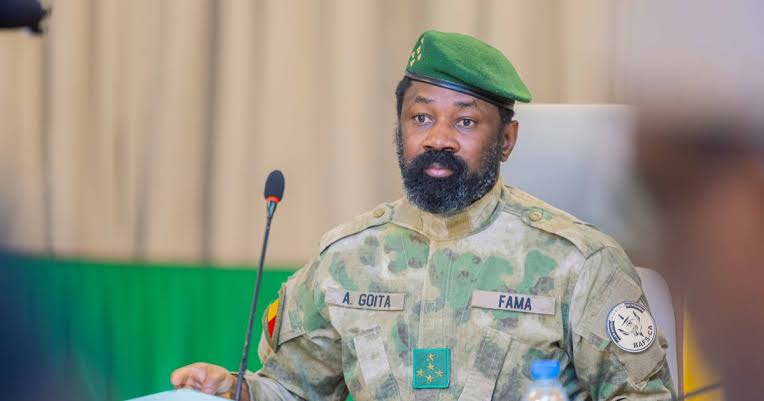
Mediaplusng.com reports that Mali’s National Transitional Council ratified an ordinance on October 22, 2026, amending the country’s Code of Persons and Family to broaden the circumstances under which authorities can withdraw citizenship from individuals by birth or naturalisation.
According to reports by Benin Web TV and La Nouvelle Tribune, the measure received 119 votes from members present during the legislative process.
Under the revised provisions, the government can revoke nationality from individuals accused of pledging allegiance to another country, supporting separatist or terrorist organisations, participating in terrorist activities or financing terrorism.
The measure also covers certain former public officials and civil society leaders accused of acting against Mali’s national interests.
However, the law provides an important safeguard: citizenship cannot be revoked if doing so would leave the individual stateless, meaning without recognised nationality in any country.
Malian authorities have argued that the previous legal framework was inadequate to protect the republic against hostile actions by some citizens. The expanded provisions therefore give the state additional legal grounds to pursue individuals accused of undermining national security.
Meanwhile, in neighbouring Burkina Faso, the military-led government has approved a revised penal code reinstating the death penalty for offences including terrorism, treason and espionage.
The decision, approved on October 20, represents a significant shift in the country’s criminal justice system. Burkina Faso abolished the death penalty for ordinary crimes in 2018, and its last known judicial execution took place in 1988, according to Human Rights Watch.
The government has presented the change as part of its response to an ongoing Islamist insurgency involving armed groups linked to al-Qaeda and the Islamic State.
Both Mali and Burkina Faso, alongside Niger, belong to the Alliance of Sahel States, a regional bloc established amid political tensions and deteriorating relations with some traditional international partners.
Their governments have increasingly placed national sovereignty, territorial integrity and security at the centre of their political agendas.
However, the two legal changes are distinct. Burkina Faso’s revised penal code expands the offences punishable by death, while Mali’s ordinance broadens the circumstances under which citizenship can be withdrawn. There is no established evidence that the decisions were coordinated.
The measures also raise broader questions about human rights, due process and the balance between national security and individual freedoms.
While governments have a responsibility to protect their populations from terrorism and other security threats, the implementation of such laws will be closely scrutinised by human rights organisations and international partners.
As insecurity continues to challenge the Sahel, attention will remain on how Mali and Burkina Faso apply their new legal provisions, particularly regarding evidence, judicial oversight and safeguards against arbitrary punishment.
The latest developments underscore the region’s changing political and security landscape, where military-led administrations are adopting increasingly stringent legal measures in pursuit of national stability.