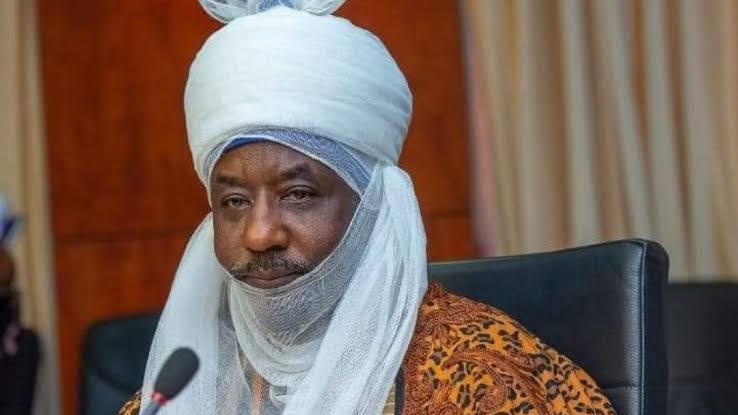
The Emir of Kano, Muhammadu Sanusi II, has acknowledged progress in Nigeria’s economy under President Bola Tinubu, saying the administration deserves credit for taking the country away from the brink of economic collapse.
However, the former Governor of the Central Bank of Nigeria has criticised the Federal Government’s communication strategy, saying it often interprets suggestions and constructive criticism as attacks.
Sanusi made the remarks on Tuesday, November 3, 2026, while speaking at the Oxford Global Think Tank Leadership Conference convened by former Director-General of the Securities and Exchange Commission, Arunma Oteh.
According to the Emir, the Tinubu administration has not communicated its economic reforms effectively and needs stronger public spokespersons capable of explaining government policies and engaging with opposing views.
He said constructive contributions should not automatically be interpreted as political attacks.
Turning to the economy, Sanusi highlighted improvements in key economic indicators, including gross domestic product growth, inflation, foreign reserves and export diversification.
He cited Nigeria’s second-quarter 2026 GDP growth of 4.48 per cent, describing it as progress compared with the average growth of approximately 0.9 per cent during the eight years of the Buhari administration.
He also pointed to the decline in inflation from about 30 per cent to 14.6 per cent, saying projections indicated a possible further reduction to 12.5 per cent before the end of the year.
On income and economic recovery, Sanusi said Nigeria’s dollar-denominated GDP per capita had increased by 47 per cent since 2023, adding that sustained progress could restore the country’s per-capita income to its 2005 level by the end of 2027.
The former CBN governor also referenced foreign reserves of approximately 55 billion dollars.
However, he cautioned that a significant portion of the inflows was driven by foreign portfolio investments, which could be volatile and vulnerable to changing global economic conditions.
He attributed some of the investment inflows to high oil prices, strong investment returns and developments around the Strait of Hormuz.
On economic diversification, Sanusi highlighted the contribution of the Dangote Refinery, saying about 20 per cent of Nigeria’s exports were coming from the facility.
He described these developments as early foundations for economic stability, stressing that the reforms should be viewed as a process rather than a complete solution.
Sanusi, however, acknowledged that significant challenges remain, particularly in translating economic improvements into better living conditions for ordinary Nigerians.
He maintained that economic progress must ultimately deliver improved livelihoods and broader opportunities for citizens.
While declaring that he was not a fan of politicians, the Emir said President Tinubu’s administration deserved recognition for the progress recorded in pulling Nigeria back from the economic brink.
His remarks come amid continuing national debate over the impact of the government’s economic reforms, the cost of living and the extent to which improvements in macroeconomic indicators are benefiting Nigerian households.