
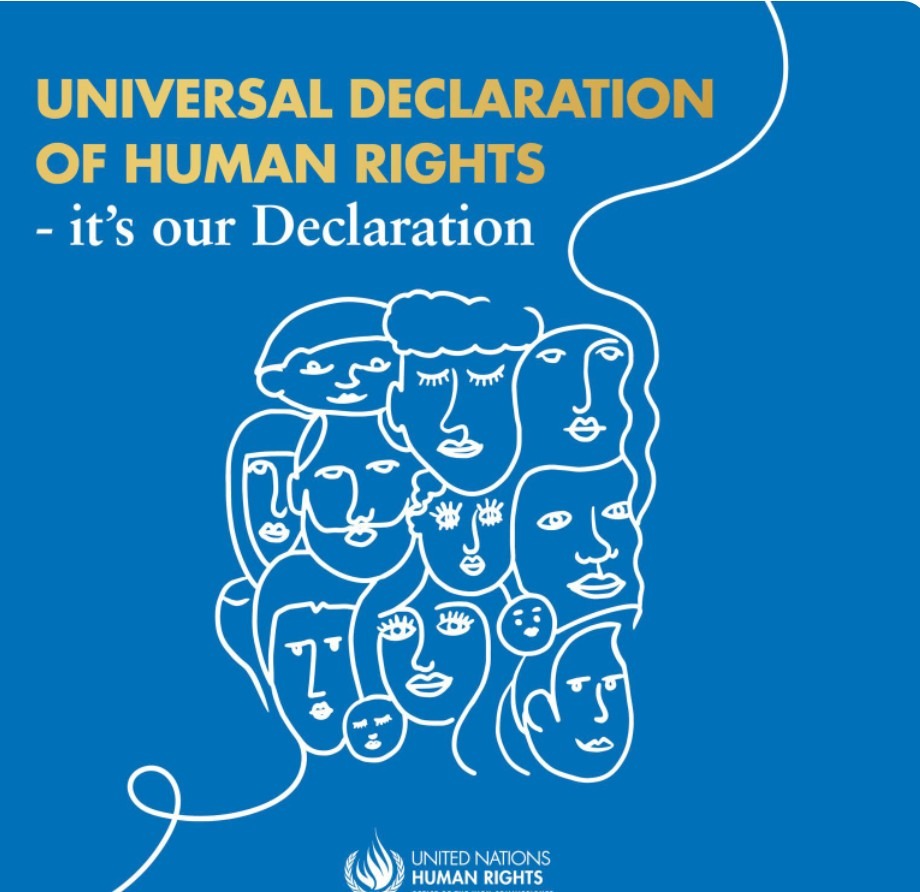
Human rights are the foundation of freedom, justice, equality and peace. They recognise the inherent dignity of every human being, regardless of nationality, race, religion, gender, language, political opinion or social background.
The Universal Declaration of Human Rights, adopted by the United Nations General Assembly on December 10, 1948, established a common standard of fundamental rights and freedoms for all people and nations.
The declaration emerged from a period marked by the devastating consequences of war, persecution and widespread human suffering. Its central message is that every individual deserves to live with dignity, free from discrimination, oppression and fear.
Article One states that all human beings are born free and equal in dignity and rights. It calls on everyone to treat one another with respect and in a spirit of brotherhood.
Article Two reinforces this principle by affirming that everyone is entitled to the rights and freedoms contained in the declaration without discrimination.
The declaration protects some of the most fundamental aspects of human existence. Article Three guarantees the right to life, liberty and personal security, while Article Four prohibits slavery and servitude in all their forms.
Article Five rejects torture and cruel, inhuman or degrading treatment or punishment. Articles Six and Seven affirm legal recognition and equality before the law, while Articles Eight to Eleven address access to justice, protection against arbitrary arrest, fair hearings and the presumption of innocence.
These provisions establish an important principle: no one should be above the law, and everyone deserves a fair opportunity to defend their rights.
The declaration also protects personal freedoms. Article Twelve safeguards privacy, family life, the home and correspondence. Articles Thirteen to Fifteen address freedom of movement, the right to seek asylum from persecution and the right to a nationality.
Articles Sixteen and Seventeen recognise the rights to marry with free and full consent, establish a family and own property without arbitrary deprivation.
Freedom of thought, conscience, religion, opinion and expression is protected under Articles Eighteen and Nineteen. Article Twenty further guarantees the right to peaceful assembly and association.
These freedoms are essential to societies where people can express their views, practise their beliefs, exchange information and participate peacefully in public life.
The declaration also recognises the relationship between human rights, democracy and good governance. Article Twenty-One affirms the right to participate in government, equal access to public service and the importance of genuine elections reflecting the will of the people.
Beyond civil and political freedoms, the declaration addresses economic, social and cultural rights.
Article Twenty-Two recognises the right to social security, while Article Twenty-Three protects the right to work, fair working conditions, equal pay for equal work and the freedom to join trade unions.
Article Twenty-Four establishes the right to rest and leisure, including reasonable working hours and paid holidays.
Article Twenty-Five addresses an adequate standard of living, including food, clothing, housing, healthcare and necessary social services. It also emphasises special care and assistance for motherhood and childhood.
Education is another fundamental right. Article Twenty-Six calls for free and compulsory elementary education and equal access to further education based on merit. It also highlights education’s role in promoting tolerance, understanding and respect for human rights.
Article Twenty-Seven protects participation in cultural life and access to scientific advancement and its benefits.
Articles Twenty-Eight and Twenty-Nine underline the importance of a social and international order in which these rights can be realised, while recognising everyone’s responsibilities to the community and the need to respect the rights of others.
Finally, Article Thirty makes clear that nothing in the declaration can be used to justify destroying the rights and freedoms it protects.
Although the declaration has inspired constitutions, laws and international human rights agreements, its principles are not always respected in practice. Discrimination, unlawful detention, human trafficking, restrictions on expression, poverty and unequal access to justice remain concerns in many parts of the world.
The declaration itself is a General Assembly declaration rather than a treaty, but its principles have profoundly influenced international human rights law.
Its enduring message is that human dignity must not depend on wealth, status, nationality or political influence.
Protecting human rights requires commitment from governments, institutions, communities and individuals. It means upholding the law, defending vulnerable people, promoting equality and ensuring that every person can live with dignity.
More than seven decades after its adoption, the Universal Declaration of Human Rights remains a powerful reminder that human rights belong to everyone, everywhere, simply because they are human.