The International Monetary Fund has warned that global financial stability risks remain elevated despite the resilience of financial markets, cautioning that an artificial intelligence market correction, rising government borrowing costs and cyberattacks could trigger fresh financial stress.
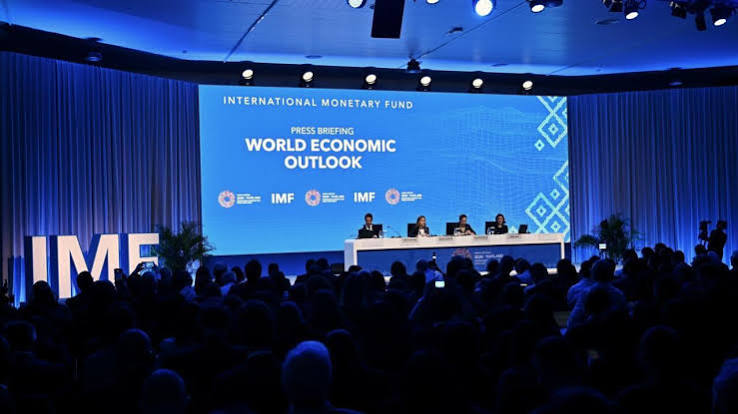
The warning is contained in the IMF’s latest Global Financial Stability Report, released in Bangkok, Thailand, during the 2026 IMF-World Bank Annual Meetings, taking place from October 12 to 18.
According to the report, financial markets have weathered multiple shocks and considerable uncertainty, supported by stronger-than-expected economic growth, robust corporate earnings and investor optimism surrounding artificial intelligence.
However, the IMF cautions that the current resilience should not be mistaken for lasting security, as underlying vulnerabilities could magnify the impact of future economic or financial shocks.
Mediaplusng.com reports that Athanasios Vamvakidis, Deputy Division Chief in the IMF’s Monetary and Capital Markets Department, identifies three major risks requiring close attention from policymakers and financial institutions.
The first is the possibility of a sharp correction in AI-related investments if expectations about future profits, productivity gains or spending fail to materialise.
The second involves rising sovereign bond yields driven by inflationary pressures, fiscal imbalances and substantial borrowing by governments, alongside increasing debt issuance by private-sector entities.
The third is the threat posed by cyber incidents capable of disrupting financial services, damaging institutions and undermining public confidence in the financial system.
The IMF warns that although these risks may be manageable individually, existing weaknesses across financial markets could amplify their consequences if several pressures emerge simultaneously.
On the banking sector, the report indicates that banks remain broadly resilient under a severe stress-test scenario involving shocks related to artificial intelligence, bond markets and energy.
Nevertheless, the IMF highlights concerns about a group of weaker banks that could become undercapitalised under such conditions. Vamvakidis says the proportion of these vulnerable institutions has been increasing.
The report also raises concerns about non-bank financial institutions, which play an increasingly important role in global financial markets.
Insurance companies and pension funds, for example, hold significant amounts of less-liquid assets, potentially exposing them to difficulties during a market downturn when they may need to raise cash quickly.
Private credit markets face additional pressures from high leverage and growing liquidity risks, which could restrict lending and affect businesses that depend on these financing sources.
Hedge funds can contribute to market liquidity and investment activity, but their use of leverage and concentration in similar trading positions could intensify market volatility during periods of stress.
The IMF also examines conditions in emerging markets, noting that many have demonstrated resilience despite global uncertainty. However, weaker policy buffers in some economies and less-transparent alternative funding arrangements in certain frontier markets remain concerns.
These vulnerabilities could leave some countries more exposed to sudden changes in investor confidence, borrowing costs and international capital flows.
Mediaplusng.com reports that the IMF is urging governments and regulators to strengthen financial safeguards before another major shock occurs.
With public debt already high in many economies and governments facing more limited room for policy responses, the Fund says restoring sustainable public finances should be a priority.
It also emphasises the importance of preserving central bank independence, maintaining credible inflation-control policies, communicating monetary decisions clearly and improving cybersecurity across financial institutions.
Regulators are further encouraged to monitor risks across banks and non-bank financial institutions, particularly where borrowing, liquidity pressures and exposure to less-liquid assets could create wider vulnerabilities.
For developing economies, including countries across Africa, the warnings underline the importance of prudent debt management, effective financial regulation, stronger digital security and policies that protect economic stability against external shocks.
The IMF’s central message is that policymakers should not wait for a crisis before strengthening financial systems.
As global markets continue to respond to technological developments, borrowing pressures and geopolitical uncertainty, the Fund says early action will be essential to preserve confidence and reduce the risk of financial disruption.
Mediaplusng.com — Reporting the stories that matter.