
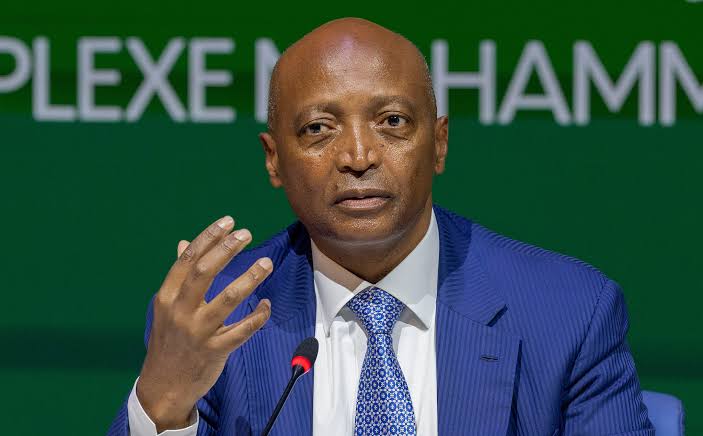
The President of the Confederation of African Football, CAF, Dr Patrice Motsepe, has called for sustained investment in youth development, football academies and domestic leagues to improve the quality and competitiveness of football across Africa.
Motsepe makes the call as part of the CAF Strategy Conference, where football leaders focus on establishing a clear vision, setting measurable targets and delivering practical results for the development of the game across the continent.
The conference highlights the importance of moving beyond ambitious plans to achieve lasting improvements in football structures, player development and competition standards.
Mediaplusng.com reports that investment in young players remains a major priority for African football, with academies and structured development programmes providing pathways for emerging talents to progress from grassroots football to professional leagues and national teams.
Strong youth development systems can help players improve their technical abilities, tactical understanding, discipline and physical fitness from an early age.
Football academies also provide opportunities for young talents to receive professional coaching, access suitable training facilities and compete in organised competitions.
For African countries seeking greater success in international football, developing these systems can help create a stronger pipeline of players for domestic clubs and national teams.
Motsepe’s emphasis on investment in leagues also points to the importance of strengthening domestic competitions.
Well-organised leagues can provide players with regular competitive football, improve professional standards and create opportunities for clubs to attract sponsors, supporters and commercial partners.
Better league structures can also help clubs invest in coaching, scouting, medical services, youth teams and modern training facilities.
However, achieving these objectives requires more than financial investment alone. Football administrators must also focus on transparent management, effective planning, accountability and the proper use of available resources.
National football associations, club owners, governments, private investors and other stakeholders all have roles to play in creating an environment where players and clubs can develop sustainably.
The development of local football can also generate wider economic benefits through employment, sports tourism, broadcasting, sponsorship, merchandising and other related industries.
For young people, stronger football systems can create opportunities not only as professional players but also as coaches, referees, sports scientists, administrators and other professionals within the sporting industry.
The CAF Strategy Conference therefore places attention on the need for a clear direction and results-driven planning to support the long-term growth of African football.
The challenge now is to translate the objectives discussed at the conference into practical programmes, sustained funding and measurable improvements across member associations.
As African football continues to produce talented players who compete at the highest levels internationally, stronger academies, competitive domestic leagues and effective youth development programmes remain important to building a sustainable future for the game.