
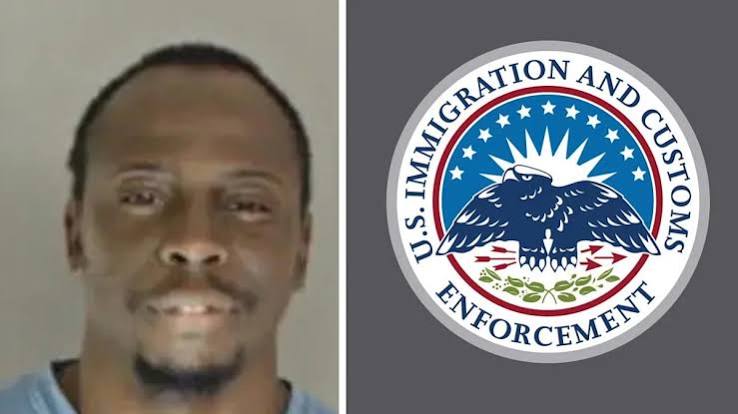
A Nigerian national who previously worked as a canvasser on a Democratic congressional campaign in the United States has reportedly been arrested by US Immigration and Customs Enforcement, following his guilty plea to a disorderly conduct charge linked to a public exposure incident.
The United States Department of Homeland Security identifies the man as Chimaobim Adedayo Igbojekwe in a statement issued on October 7, 2026.
The case has drawn attention because of the individual’s reported involvement in American political campaigning and the immigration consequences that may follow a criminal case involving a non-US citizen.
According to the information provided, Igbojekwe enters a guilty plea to a disorderly conduct charge connected to an incident involving alleged public exposure. Immigration authorities subsequently take him into custody.
However, the details currently available do not establish the exact circumstances of the incident, the location where it occurred, the date of the guilty plea or the specific legal grounds for his detention by immigration officials.
It is also important to distinguish between a criminal case and an immigration enforcement proceeding. A guilty plea to a criminal charge does not, by itself, explain every aspect of a subsequent immigration detention. The applicable immigration provisions and the individual’s legal status would need to be established from official records.
Igbojekwe’s reported work as a canvasser on a Democratic congressional campaign has also attracted attention. Campaign canvassers commonly support political candidates by speaking with voters, distributing campaign information and encouraging participation in elections.
Nevertheless, his reported political campaign work should be distinguished from the criminal charge and the subsequent immigration proceedings. The available information does not establish that the campaign itself was involved in the incident.
The Department of Homeland Security’s statement, dated October 7, 2026, is identified as the source of the man’s name and the reported arrest. Further official documentation would be necessary to establish the full chronology of events and the legal basis for ICE’s action.
Important questions remain about whether Igbojekwe faces removal proceedings, whether he has an opportunity to challenge his detention and whether a court has issued any additional orders in the case.
The outcome of any immigration proceedings would depend on the applicable law, his immigration status and the specific facts of his case. A criminal guilty plea and a final immigration removal decision are separate legal matters and should not be treated as interchangeable.
The case also underscores the importance of verifying official statements and court records when reporting on criminal allegations involving immigrants. Accurate reporting requires a clear distinction between established facts, allegations and legal consequences that have yet to be determined.
As further information becomes available, details concerning the underlying incident, the criminal proceedings and the status of the immigration case will be necessary to provide a complete account.