
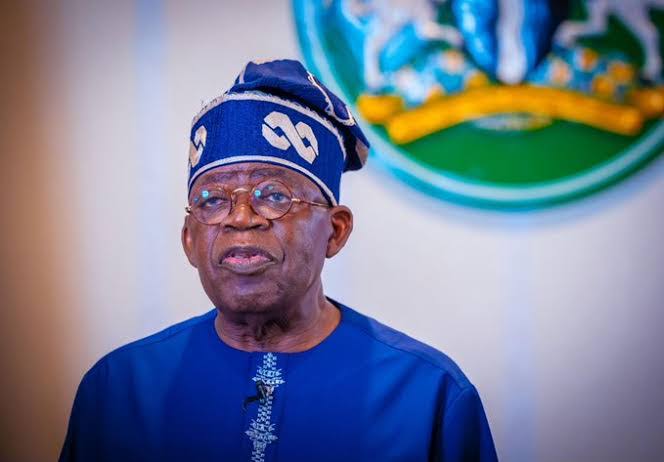
President Bola Ahmed Tinubu has withdrawn his earlier request for $20.5 billion and €1.045 billion in external loans, replacing it with a fresh borrowing proposal of approximately $7.7 billion to part-finance Nigeria’s 2026 budget deficit.
The new request, equivalent to about ₦10.79 trillion, was contained in a letter dated October 26, 2026, which Senate President Godswill Akpabio read during plenary on Wednesday, November 4.
According to the President, the proposed borrowing represents the external financing component of the ₦29.2 trillion approved borrowing under the 2026 Appropriation Act.
The approved borrowing plan comprises ₦18.4 trillion in domestic borrowing and ₦10.79 trillion in external financing.
Tinubu explained that the Federal Government intends to raise the $7.7 billion through different financing channels, including loans from multilateral and bilateral institutions, International Monetary Fund facilities, bridge financing and Eurobond issuance.
However, the President indicated that greater emphasis would be placed on Eurobond issuance because of its relatively faster processing and potential to raise larger amounts.
He said the final interest rates, repayment periods and other conditions would depend on prevailing market conditions when the funds are raised.
The President also explained that the proposed funds would support priority projects and programmes in defence and security, transportation, agriculture, power, education and healthcare.
Additionally, he said the foreign currency inflows would strengthen Nigeria’s external reserves and potentially support the stability of the naira.
Reacting to the correspondence, Senate President Godswill Akpabio said the new proposal effectively supersedes the earlier $20.3 billion borrowing request, describing the latest submission as more explicit about the government’s financing arrangements.
Akpabio subsequently referred the request to the Senate Committee on Local and Foreign Debts for further legislative consideration.
The development comes amid continuing national debate over Nigeria’s rising public debt, borrowing requirements and the impact of debt servicing on government revenue.
While the Federal Government maintains that external financing is necessary to implement critical budgetary projects, questions remain about the cost of borrowing, repayment obligations and the long-term sustainability of Nigeria’s debt.
The proposed $7.7 billion facility is awaiting the necessary legislative approval before implementation.