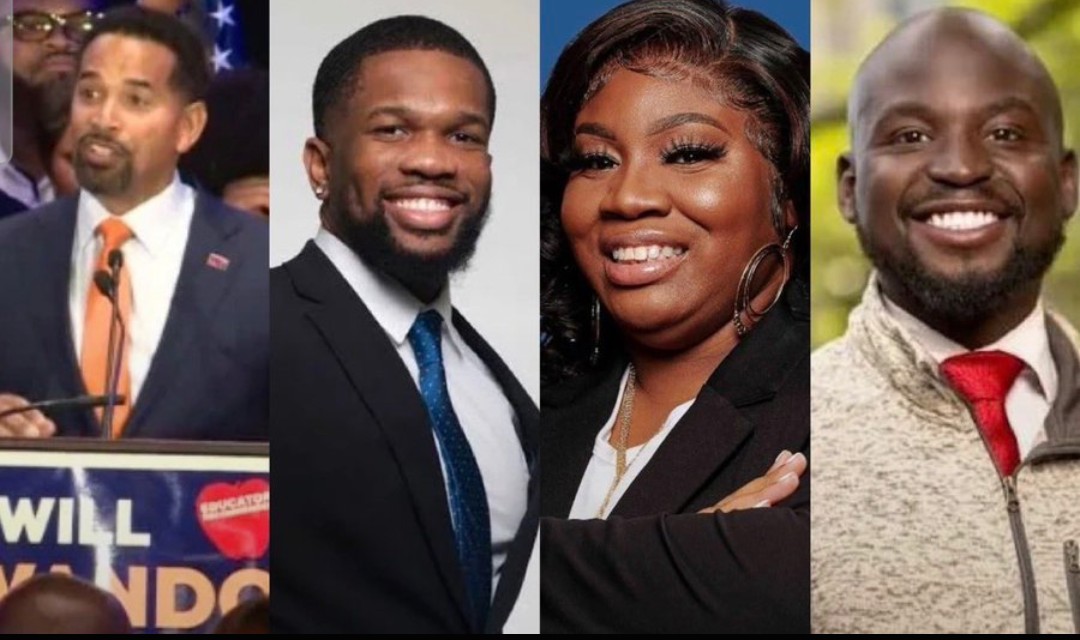
Four politicians of Nigerian descent have secured victories in the November 3, 2026, United States midterm elections, winning elective positions across Maryland, Texas, Washington, DC, and Pennsylvania.
The winners are Will Jawando, Junior Ezeonu, Oye Owolewa and Carol Kazeem, all of whom contested on the platform of the Democratic Party.
In Maryland, Will Jawando won the race for Montgomery County Executive, defeating Republican candidate Esther Wells. Jawando, 43, is the son of a Nigerian father and an American mother. He previously served on the Montgomery County Council.
In Texas, 27-year-old Junior Ezeonu secured a seat in the State House of Representatives for District 101. Born in Onitsha, Anambra State, Ezeonu moved to the United States with his family when he was two years old. He previously served on the Grand Prairie City Council.
Meanwhile, Oye Owolewa won an at-large seat on the District of Columbia Council in Washington, DC, securing approximately 69 per cent of the votes against independent candidate Elissa Silverman.
Owolewa, a pharmacist and son of Nigerian immigrants from Kwara and Osun States, previously served as Washington DC’s shadow representative to the United States Congress.
In Pennsylvania, Carol Kazeem retained her seat in the State House of Representatives for District 159, defeating Republican challenger Michael Bannon. She was first elected in 2022.
However, another Nigerian-born politician, Segun Adeyina, was initially awaiting the outcome of his re-election bid to the Georgia House of Representatives for District 110.
UPDATE: Subsequent election reports indicate that Adeyina also secured victory, defeating Republican challenger Charles Lollar. Another Nigerian-American politician, Gabe Okoye, was also re-elected in Georgia’s District 102.
The victories underscore the growing participation of Nigerians and Americans of Nigerian descent in political leadership and public service in the United States.
From local government leadership to state legislatures, these politicians are expanding the Nigerian diaspora’s representation in American public life.